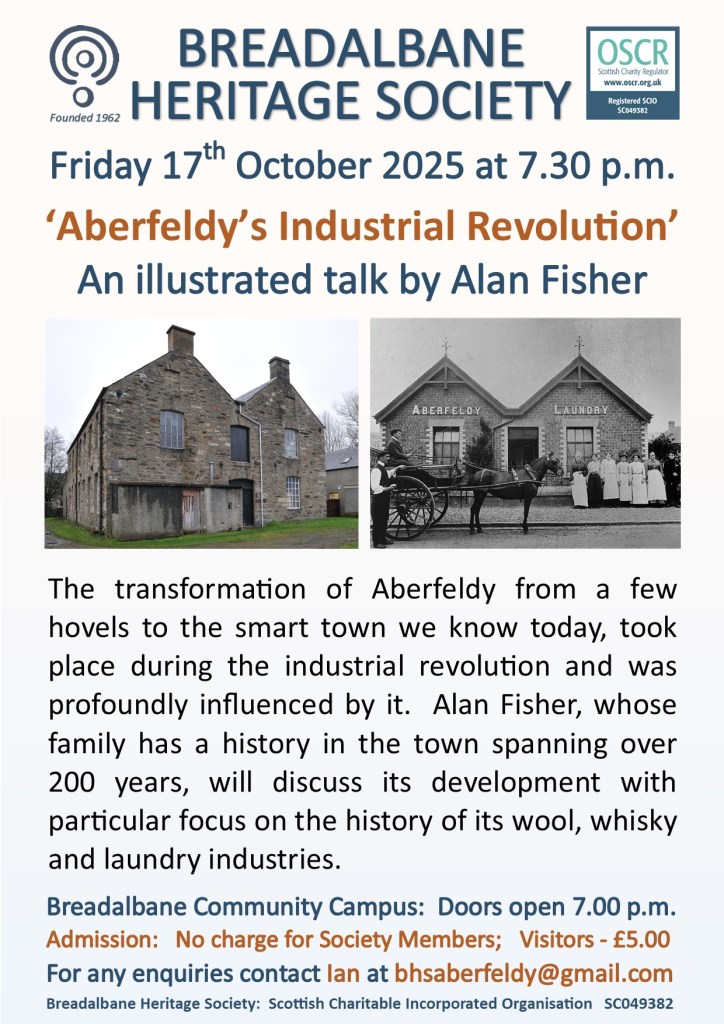
Forthcoming Winter Talks

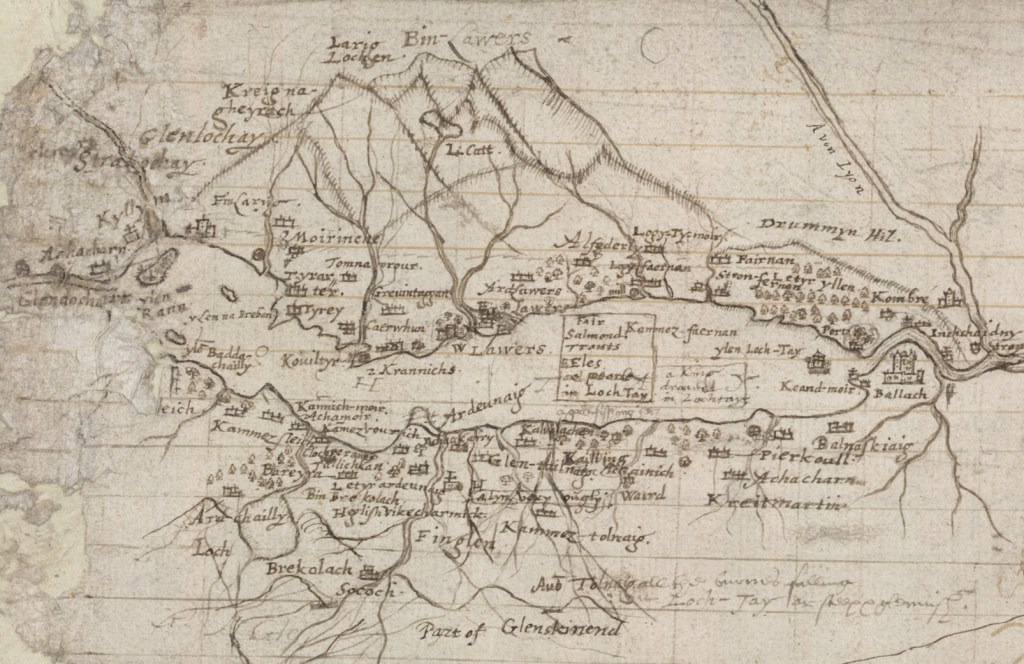
In the evening of Friday 21st of November, we had a very enjoyable, interesting and well-presented talk by Chris Fleet, Map Curator at the National Library for Scotland (NLS), on ‘The Mapping of Perthshire and Breadalbane through the Ages’.

Pont Maps of Scotland 1580-1614

Chris has worked at the National Library of Scotland since 1994. His main focus at NLS has been on curating digital mapping, including the electronic legal deposit of modern map datasets, as well as managing long-term projects to make available historical maps online. He has researched, written and spoken widely on these subjects, and is a co-author of Scotland: Mapping the Nation (2011), Edinburgh: Mapping the City (2014), Scotland: Mapping the Islands (2016), and Scotland: Defending the Nation (2018).

His talk examined selected maps of Perthshire and Breadalbane over the last four centuries, looking at who made these maps, why, and who they made them for. Over the centuries, different purposes including state integration, military conquest, agricultural improvement, and improving communications resulted in very different maps. He particularly focused on how particular map-makers gathered their information, and how this resulted in very different maps. He finished up by looking at new online content of interest on the NLS maps website, particularly new maps, gazetteers, viewers and tools.

You can view his talk here: The Mapping of Perthshire and Breadalbane through the Ages’

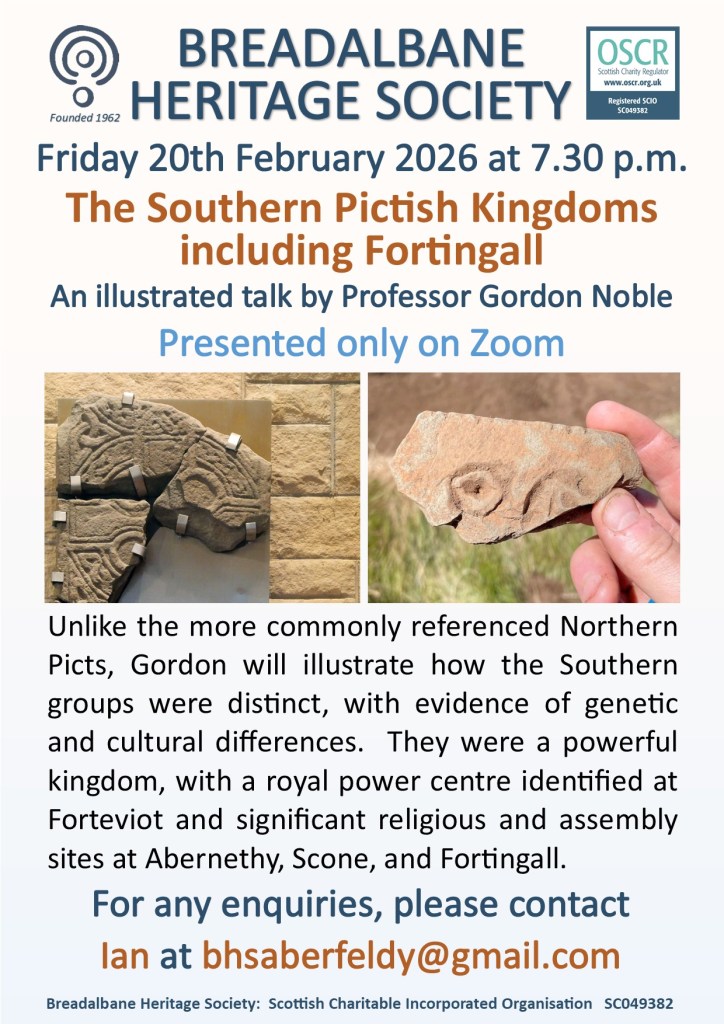
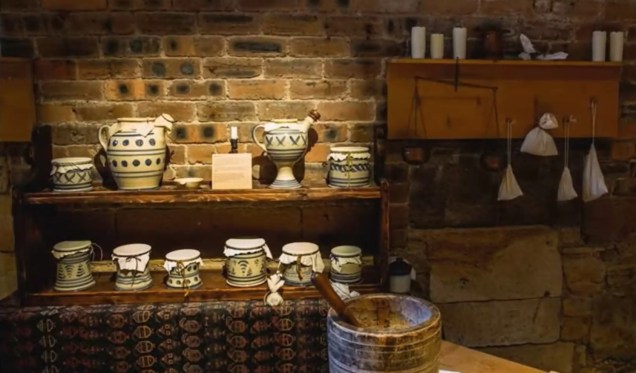
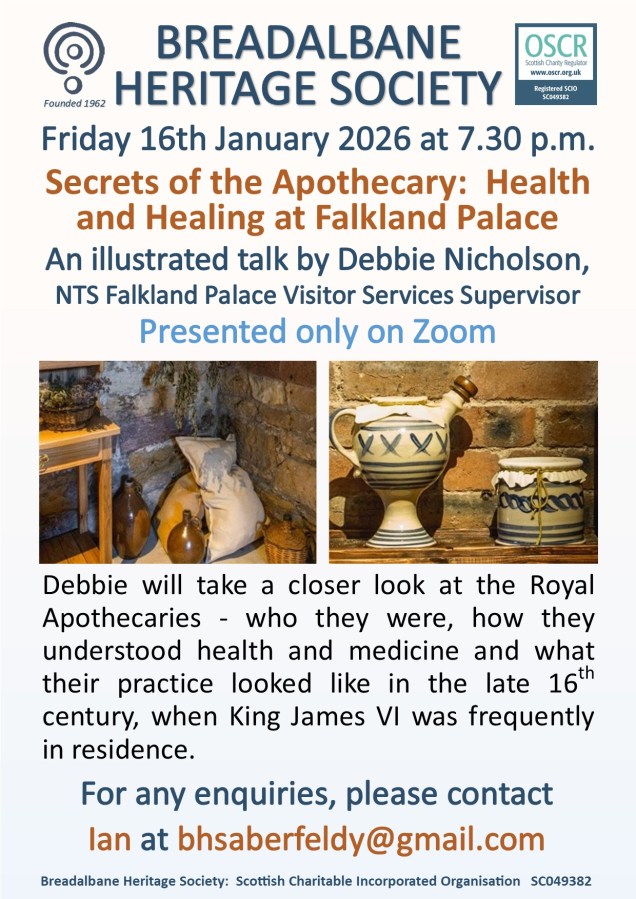
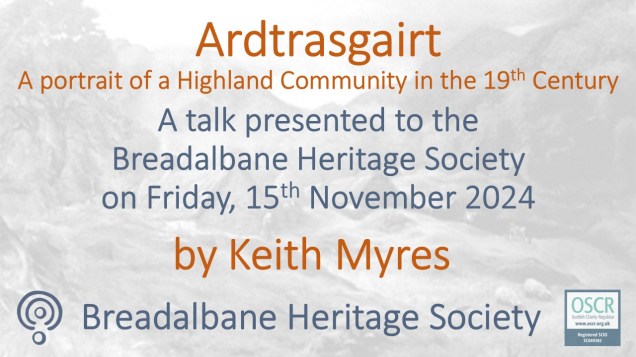
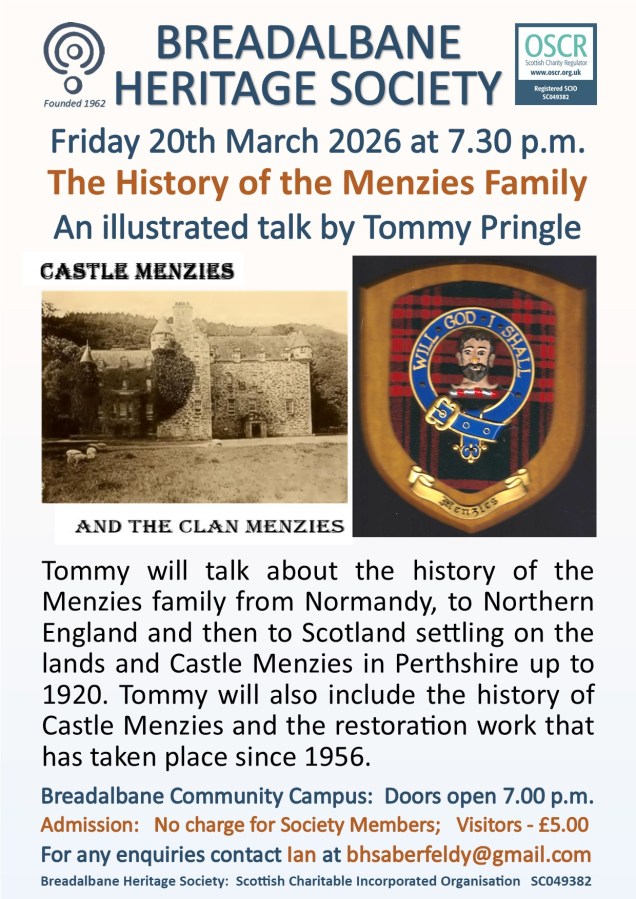
Due to the vagaries of the winter weather and the proximity to Christmas, we do not hold a December meeting and talk. We start again in January but, again due to the vagaries of the winter weather in January and February, we present both of the January and February talks only on Zoom; our final winter talk in March will be presented ‘in person’ once again in the Breadalbane Community Campus building in Aberfeldy. The list of the January to March talks is presented on the poster below:

More details of the content of each of these talks will be provided in the website in two to three weeks before each talk.

The new 2025-26 winter season of talks

Our winter season of six talks begins in September and runs through to March on the third Friday of the month, apart from December when there is not a talk. With the exception of the January and February talks which are presented only online on Zoom, the other talks are held in the main hall of the Breadalbane Community Campus in Aberfeldy at 7.30 p.m.

For further information about our talks, past and present, go to our Events page or contact Ian at bhsaberfeldy@gmail.com.

The Life of a 12 year old Evacuee in Killin in 1941-42

Introduction

In 1984, Leslie Boumphrey wrote an article called “Evacuated to Killin” which was published in the Killin News.  His article explained how he and his younger sister were evacuated from Glasgow in April 1941, shortly after the devastating “Clydesdale Blitz” on the 13th and 14th of March 1941, and he went on to describe the enjoyable life he had for approximately the next 15 months in Killin.

His daughter, Jackie Heath, has an edited copy of the article, but not the published original and unfortunately, despite further investigations, a copy of the original article has not been found. 

The edited version, “Killin, Memories of an Evacuee” still paints a lively picture of the life of a 12 year old evacuee in Killin during the early years of World War II, and so it has been included below.

“Killin, Memories of an Evacuee”

Smells are nostalgic.  Woodsmoke, coming from houses, always reminds me of Killin. That smell was the village’s herald as I opened the window of the funny, little, single carriage train from Killin Junction.

Most children were evacuated at the beginning of the War; we went from Glasgow to Rothesay on the 3rd  September 1939, but we were back home again in December because nothing seemed to be happening.  All was fairly safe until the “Clydesdale Blitz” on the 13th  and 14th  March 1941, which was so terrifying that my parents made plans to send my sister and me to a less dangerous place.  The mother of our neighbour, Donnie Nicholson, lived in Killin, and by early April we were arriving, to that smell of wood smoke, at Millmore, the house of Eck MacPherson and his family on the banks of the river Dochart.  I was twelve, my sister nearly six; we cried ourselves to sleep the first night.

We soon settled down to an exciting life, dominated by three things – the river, the smithy, and school.

The river was dangerous, challenging, beautiful, and noisy; I couldn’t sleep for it at first and couldn’t keep away from it during the day.  The rocks were there to scramble on and jump over; the island had to be reached, but it was inaccessible because of the spate.  I found a friend in Willie Foster and, exploring together, we pioneered a route to within one jump of the island.  It was too far for us to leap, but in the middle of the raging torrent was a rock just below the surface; we watched the water every day until the rock was exposed enough for us to jump using it as a stepping stone; the magic island was ours.

We found a robin’s nest – I could show you the place even now – and one of its eggs was the first of our collection.  We were very careful and did not think any harm would be done in taking just one egg from a nest, but now I’m a little embarrassed at the memory.

Downstream from the island the water became even more turbulent, until the restricting rocks forced it through a narrow gap and it roared down under the bridge into the dark, swirling salmon pool.  Here we spent many hours watching the salmon leaping the falls on their way to the spawning grounds.  We also watched the fishermen; for in the lee of the falls, clear of the boiling water was a fishes’ waiting room where fine trout could be caught.  One day we came upon an army captain there who already had two beautiful trout.  “How long are you staying?” we asked, “Till I’ve got six!”; and he did, all of them looking about three or four pounds.

The most astute fisherman was Mr Wilson, who owned the woollen shop and mill.  He did not fish frequently, but I was told that he was an expert at recognising the right conditions of water and weather, and he seldom came home emptyhanded.  His establishment, on the riverbank, was a working mill but the weaver, Jimmy (I’ve forgotten his surname), was serving in the R.A.F..  When he came home on leave he showed me how to use the spinning wheel and let me have a go on one of the looms – I could just reach the treadles.  The noise, the rhythmic click clack-clack of the shuttles, and the variety of subdued, heathery colours fascinated me.  I was so proud of the small piece of cloth that I wove.

Round the corner from the woollen shop was the smithy, or smiddy, and the smith – Colin Kennedy.  I spent wet days there and knew every detail of shoeing a horse, from selecting the right length of bar to the final pat on the rump.  Colin claimed to be able to tell where a horse had been shod anywhere in the Highlands just by looking at the workmanship.  He was challenged one day by a tinker and identified the shoeing as being by a certain smith in the remote West Highlands; the tinker was amazed.

My six years old sister solemnly announced during a lull in the lunch-time conversation, “The Germans are a lot of buggers.”  Tactfully asked why she thought that, she replied, “The men in the smiddy say so, so it must be true!”  They were the ultimate authority on every subject!

After a few months I think that the MacPhersons must have had enough of us, for we moved to ‘Lyndoch’ in the middle of the village to stay with Mrs MacIntyre and her two daughters, Isa and Alexa.  I remember Miss Alexa best of all; she was my class teacher for the last few months of junior school and my English teacher for the first year of the secondary section.  She made a lasting impression – I remember her grey stockings and MacIntyre tartan skirt, the way she wrinkled her nose, her love of poetry and the countryside; my own teaching of poetry and appreciation of nature owe something to her.  

But Killin School in those days meant Mr MacRaw, the Headmaster – old Jake to us and all the village.  He taught us everything except English, French, and Science; no doubt he was an expert in these too, but the timetable would not allow him to teach everything to everybody.  If you would like a description of Old Jake, read that part about the village schoolmaster in Oliver Goldsmith’s “The Deserted Village”.  There were three classes in the secondary department, and I was only in the first year, all occasionally being taught together in the same room.

I have been taught and also taught in scores of classrooms in the last forty years, but none has had the chalky, scholarly, homely atmosphere of that room.  Behind the Headmaster’s desk was a large open fire, the only heating in the room, guarded by tall brass railings.  On winter mornings we hung our wet hats and scarves and gloves on the rail, and soon the rising steam became the backcloth to blackboard and easel, chalky dusters, and dusty Latin.  And on winter afternoons the oil lamps were lit.

In the school yard was a shed where we spent morning breaks swinging from rafter to rafter until we could go from end to end and back again without touching the floor, despite the agony.  The bleeding blisters soon hardened into strips of rawhide, and we were seasoned Tarzans.  In the summer we dug ground-nuts out of the knoll behind the school while the opulent went to the sweetshop across the road, where toffees could be bought for a ha’penny each.

The comparative peace of this daily round was broken when a company of Commandos spent a fortnight in the village, some of them billeted in the Drill Hall, learning how to ski. The lower slopes of Sròn a’ Chlachain, the hill behind the village, were used as nursery slopes for the first few days; then they graduated to advanced training on Creag Ghlas.  We were more interested in visiting the soldiers in the evening, to see the weapons and other items of equipment, and to learn how to fill Sten gun magazines.  Some time later, when we heard about the Commando raid on the Lofoten Islands, we felt that we had been part of the preparations.

In the spring of 1942, my father bought me a bike and all the magnificent country within a radius of about twenty miles was explored – round Loch Tay, over Glen Ogle and round Loch Earn (Glen Ogle was harder coming back!), up Glen Lochay, up Glen Dochart to Crianlarich, and shorter rides to Ardeonaig, Auchlyne, and the lanes round about.

Other random memories “flash upon that inward eye” – the sawmill, where I was allowed to operate the chain which opened and closed the gate in the lade, controlling the flow of water to the great water-wheel by which the whole mill was powered; Sunday walks to Finlarig Castle to see primroses or collect beech nuts, which we coloured in school and made into decorations; swimming in the ‘canal’, the shortcut from the Dochart to the loch; catching perch from the Black Bridge over the Lochay; Dochy Johnson, the local tinker, who played the pipes outside the pub on Saturday nights, and who joined the Army just to get the boots, then deserted; the McLaren Hall – S.W.R.I. , scones, pancakes, jam, and touring film shows attended by the whole village; the salmon, a twenty-one pounder, first of the season, bent like an ox-bow lake, being carried up the street on a January evening; our initials carved high on a sycamore on the railway embankment just by the bridge over the Dochart, with the initials V…. so that future archaeologists could identify the precise period.

All this lasted a very short time, and by the late summer of 1942, when bombing seemed to have eased off and my parents thought that going to Queen’s Park School was more important than enjoying myself, I was back in Glasgow.  But mine was a happy War during that time in Killin, and the smell of wood-smoke never fails to raise a memory.

Leslie Boumphrey,  1984

P.S.  If anyone has a copy of the original 1984 article, “Evacuated to Killin”,  published in the Killin News, please contact us at bhsaberfeldy@gmail.com, as this would be of great interest to Jackie, Leslie’s daughter.

A Winter Talk: “Abbeys and Castles in Dumfries and Galloway”

Stefan Sagrott, HES Senior Cultural Resources Advisor is responsible for all the Historic Environment Scotland properties in Dumfries and Galloway, and presented an illustrated talk on the abbeys and castles, amongst other properties, predominantly in the Galloway area. 

Stefan has worked with Historic Environment Scotland  for over 8 years and, since September 2021, he is the Senior Cultural Resources Advisors (South).  His work contributes towards developing greater understanding of, and the management and conservation of, the HES estate and its cultural significance.  

He is a member of the HES Cultural Resources Team , and of the Cultural Assets Directorate. His job necessitates him having a broad range of research interests across many periods and he provides specialist heritage advice relating to the Properties in Care (PIC).

Watch here: ‘Abbeys and Castles in Dumfries and Galloway’

‘Wade and Caulfeild’ and ‘Cluny Gardens’ winter talks

The October talk by Colin Liddell on ‘The Military Bridges of Wade and Caulfeild’ and the April talk by John Mattingley on ‘Cluny Gardens in the Spring’ were recorded and can now be viewed below.

Colin Liddell who in the past has presented talks on General Wade’s Scottish roads, concentrates this time on the bridges constructed by General Wade and his successor, Major William Caulfeild, who supervised the construction of many more roads and bridges than Wade.

The talk looks at military bridges built between 1726 and 1767, constructed by Major-General George Wade MP, “Commander of Forces in Northern Britain”, and Major William Caulfeild, Chief Engineer, later “Inspector of Roads in Scotland”, including those bridges still in use, some restored, others discovered, and some now lost, culminating in the famous ‘Wade Bridge’ itself in Aberfeldy.  Watch here: ‘The Military Bridges of Wade and Caulfeild’

John started his talk with a short introduction on the history of Cluny and its gardens, and how it has developed and the future.

Spring is a glorious time at Cluny with carpets of North American bulbs and tubers in April while May brings colourful Candelabra primulas and wonderful blue Himalayan poppies. Watch here: https://vimeo.com/manage/videos/1083524454

You will also be able to find the recordings of these two talks along with all previous recorded talks on the ‘Recorded Winter Talks’ page in this website: https://breadalbane-heritage.org.uk/recorded-winter-talks/

Margaret E C Stewart Contribution to Scottish Archaeology

Digging in the Archives for Margaret E C Stewart: The Contribution of Women to Scottish Archaeology in the Twentieth Century

Amy Jo Kearton, a graduate in History from the University of Glasgow in 2024, undertook research as part of her Honours’ degree dissertation aimed to help locate women within the history of Scottish archaeology and focused on Margaret Stewart because her archaeological career represented the wider achievements of female archaeologists in twentieth-century Scotland.

From her extensive research for her dissertation, Amy Jo recently wrote a summary profile of Margaret in which she explored the process of excavating Margaret from historical records and then delved into Margaret’s involvement with the Breadalbane Heritage Society. 

This was presented and uploaded as a blog on our website in December 2024.

You can read that profile of Margaret by clicking on this link:  https://breadalbane-heritage.org.uk/about/history/margaret-e-c-stewart-in-breadalbane-heritage-society/

As the blog attracted a lot of interest, Amy Jo consented to us publishing her full dissertation on our website, and here is an introductory extract from the dissertation:

Overall, this life history of Margaret aims to assess the place of individual women in Scottish archaeology.

Chapter One considers Margaret’s motivations to pursue archaeology and her education under Gordon Childe at the University of Edinburgh.

The second chapter delves into Margaret’s career using representative examples to understand how she became a respected archaeologist.

The final chapter examines Margaret’s public and administrative work within numerous societies.

By integrating the different strands of her personal and professional life, this dissertation demonstrates how Margaret navigated the field and constructed an accomplished career. In doing so, Margaret is positioned within the disciplinary history of Scottish archaeology and a wider circle of female archaeologists.

Therefore, Margaret’s achievements in Scottish archaeology can be celebrated alongside those of women throughout the twentieth century.

You can read Amy Jo’s full dissertation on the website here:  https://breadalbane-heritage.org.uk/margaret-e-c-stewart-contribution-to-scottish-archaeology/

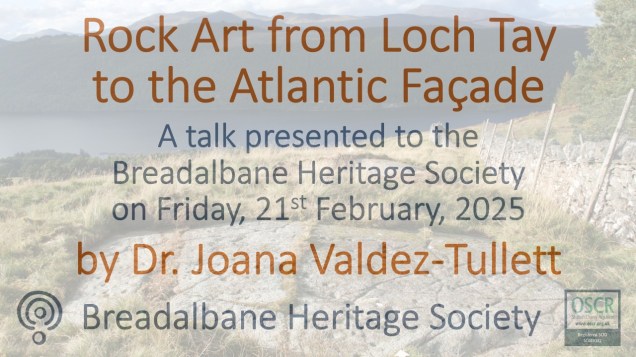
Rock Art from Loch Tay to the Atlantic Façade

Our next winter talk, ‘Rock Art from Loch Tay to the Atlantic Façade’ will be presented only on Zoom by Dr. Joana Valdez-Tullett on Friday, 21st February, at 7.30 p.m., and we invite you to attend this free talk.

Joana is a Technical Specialist at Wessex Archaeology and a part-time teacher at Durham University. She was a Post-doctoral Research Assistant for almost five years with the Scottish Rock Art Project and has wide experience in rock art research of various periods, including Palaeolithic Art.  She has been studying and investigating rock art from a number of western European countries (Portugal, Spain, Britain and Ireland) since 2003.

Recent research has suggested that the rock art tradition had a very important role in people’s lives during the Neolithic and Early Bronze Age periods. Joana will discuss results of the research from the Scotland Rock Art Project in Loch Tay, and how carvings in this region relate to other areas in Scotland and the wider Atlantic façade.

If you wish more information on, or want to register for, this talk, please contact Ian at bhsaberfeldy@gmail.com and he will send you the Zoom link.

Abbeys and Castles in Dumfries and Galloway

Our next winter talk, ‘Abbeys and Castles of Dumfries and Galloway’ will be presented only on Zoom by Stefan Sagrott on Friday, 17th January, at 7.30 p.m., and we invite you to attend this free talk. Stefan is the Historic Environment Scotland’s Senior Cultural Resources Advisor (South) and is responsible for all the HES properties in Dumfries and Galloway.

If you wish more information on or want to register for this talk, please contact Ian at bhsaberfeldy@gmail.com and he will send you the Zoom link for this talk.

Our February talk, ‘Rock Art from Loch Tay to the Atlantic Façade’, will also be presented only on Zoom and we will publish more information on this talk in due course.
 

Margaret E. C. Stewart: Our first Honarary President

Profile researched by Amy Jo Kearton

Introduction:

Margaret Stewart at the Carse Farm excavation, 1964

In 1962, Dr. Margaret Enid Crichton Stewart who played a central role in community archaeology in Perthshire, was instrumental in encouraging the formation of the present-day Breadalbane Heritage Society.

Amy Jo Kearton, a recent graduate in History from the University of Glasgow, undertook research as part of her Honours’ degree dissertation aiming to help locate women within the history of Scottish archaeology. She focused on Margaret Stewart because her archaeological career represented the wider achievements of female archaeologists in twentieth-century Scotland.

From her dissertation work, Amy Jo has written a profile of Margaret in which she explores the process of excavating Margaret from historical records and then digs into Margaret’s involvement with the Breadalbane Heritage Society.  You can read her profile of Margaret by clicking on this link:  https://breadalbane-heritage.org.uk/about/history/margaret-e-c-stewart-in-breadalbane-heritage-society/