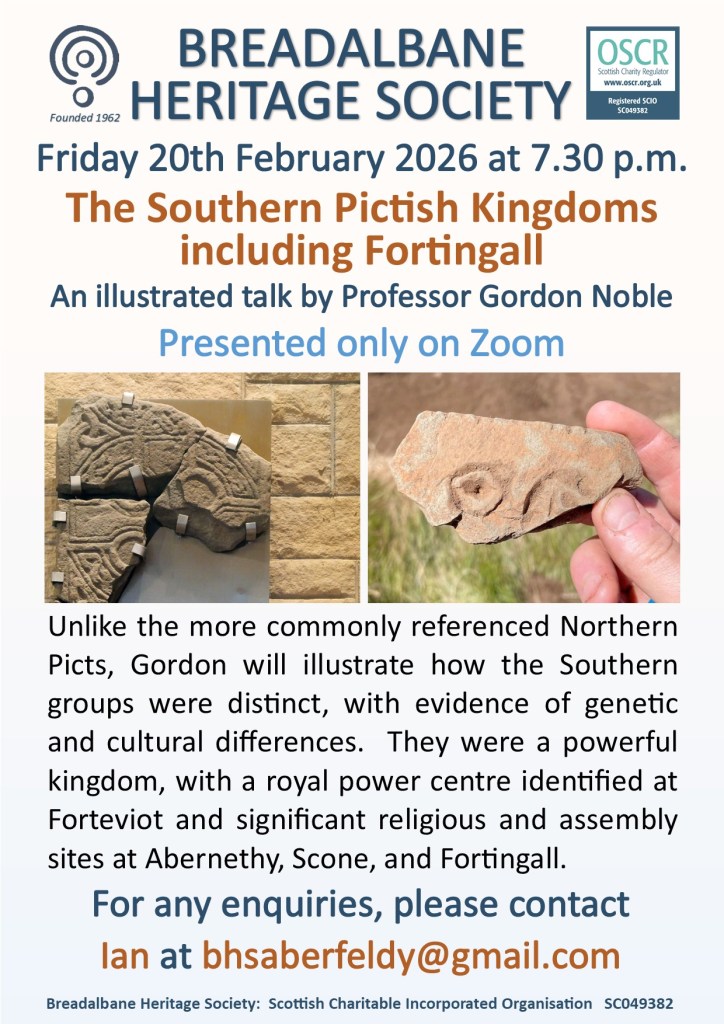
Gordon Noble was appointed as lecturer to the department at Aberdeen in July 2008. In 2012 he became Senior Lecturer, Head of Department in 2015, Reader in 2017 and Professor in 2019. He is also a Honorary Curatorial Fellow to the University Museums.
He has undertaken award-winning landscape research and field projects working on projects from the Mesolithic to Medieval periods.
He has two major current projects, Northern Picts, funded by the University of Aberdeen Development Trust and Historic Environment Scotland, is focused on the post-Roman societies of northern Britain. The second, Comparative Kingship, funded by the Leverhulme Trust, is examining the early royal landscapes of Ireland and Scotland. Research for the Northern Picts and Comparitive Kingship projects won Research Project of the Year 2021 in the Current Archaeology Awards, the leading UK archaeology awards programme.
Public engagement is a big part of his research with Northern Picts having featured in numerous exhibitions and on five series of BBC 2 ‘Digging for Britain’, The History Channel, Smithsonian Channel, National Geographic, Radio 4 ‘In Our Time’ and many other media venues.
My apologies for not being able to edit and upload the following talks until now, but we are now up to date – until our January Zoom talk comes along in eleven days!
Lying at the foot of Glen Lyon, the talk about the small community in Ardtrasgairt covers the changes in this working class community who lived there in the mid to late 19th century, and examines the effect of dramatic changes as industrialisation progressed. Watch here: ‘Ardtrasgairt – A potrait of a small Highland Community in the 19th Century’
Prehistoric rock art in Scotland is mostly known for its cupmarks, cup-and-rings and other circular imagery. In this talk Dr. Joana Valdez-Tullett discussed the results of Scotland’s Rock Art Project research in Loch Tay, and how carvings in this region relate to other areas in Scotland and the wider Atlantic façade. Watch here: ‘From Loch Tay to the Atlantic Façade‘
Invasive Non-Native Species (INNS) are a significant threat to our environments, native wildlife, economy, and in some cases to our health. The Scottish Invasive Species Initiative (SISI) is a project set up to tackle invasive non-native species, and Mark from SISI, will talk about the work he has done within the Esk & Tay catchment area and how invasive plants, particularly Giant Hogweed and Japanese Knotweed have been controlled. Watch here:‘Strategic Control of Invasive Non-Native Species in a River System’
The transformation of Aberfeldy from a few hovels to the smart town we know today, took place during the industrial revolution and was profoundly influenced by it. Alan Fisher, whose family has a history in the town spanning over 200 years, discussed Aberfeldy’s development with particular focus on the history of its wool, whisky and laundry industries. Watch here:‘Aberfeldy’s Industrial Revolution’
You can view these talks by using the links above for each one, but you can also access these by using the website “Recorded Winter Talks” page at https://breadalbane-heritage.org.uk/recorded-winter-talks/, which has links to all of the 28 recorded talks since September 2020. We were not permitted to record a few talks within this period which explains why there are some gaps in the winter season dates.
Our next winter talk, ‘Rock Art from Loch Tay to the Atlantic Façade’ will be presented only on Zoom by Dr. Joana Valdez-Tullett on Friday, 21st February, at 7.30 p.m., and we invite you to attend this free talk.
Joana is a Technical Specialist at Wessex Archaeology and a part-time teacher at Durham University. She was a Post-doctoral Research Assistant for almost five years with the Scottish Rock Art Project and has wide experience in rock art research of various periods, including Palaeolithic Art. She has been studying and investigating rock art from a number of western European countries (Portugal, Spain, Britain and Ireland) since 2003.
Recent research has suggested that the rock art tradition had a very important role in people’s lives during the Neolithic and Early Bronze Age periods. Joana will discuss results of the research from the Scotland Rock Art Project in Loch Tay, and how carvings in this region relate to other areas in Scotland and the wider Atlantic façade.
If you wish more information on, or want to register for, this talk, please contact Ian at bhsaberfeldy@gmail.com and he will send you the Zoom link.
17 BHS members participated in the final BHS summer excursion for a 4-day trip to the Angus area to visit a number of archaeological and historical sites, predominantly owned by Historic Environment Scotland, from Monday the 22nd to Thursday the 25th of August.
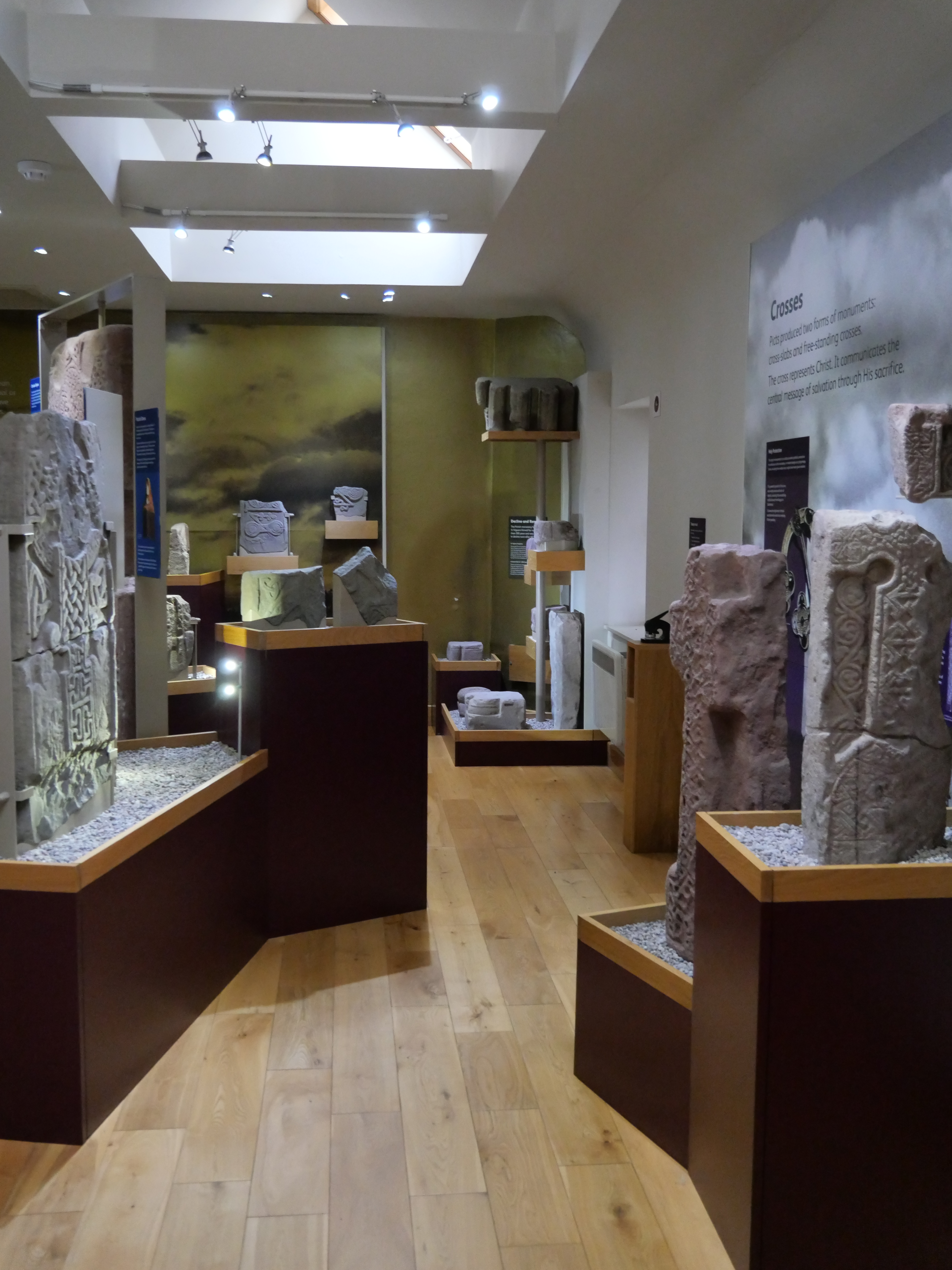
On the Monday, we visited the Meigle Sculptured Stone Museum, the Eassie Sculptured Stone and the four sculptured stones at Aberlemno before travelling to the George Hotel in Montrose, our base for the following days. We were very lucky that John Borland, who presented a talk on Medieval Sculptured Stones for us in January, was able and keen to join us for the day and to guide us through the meaning of many of the Pictish symbols.
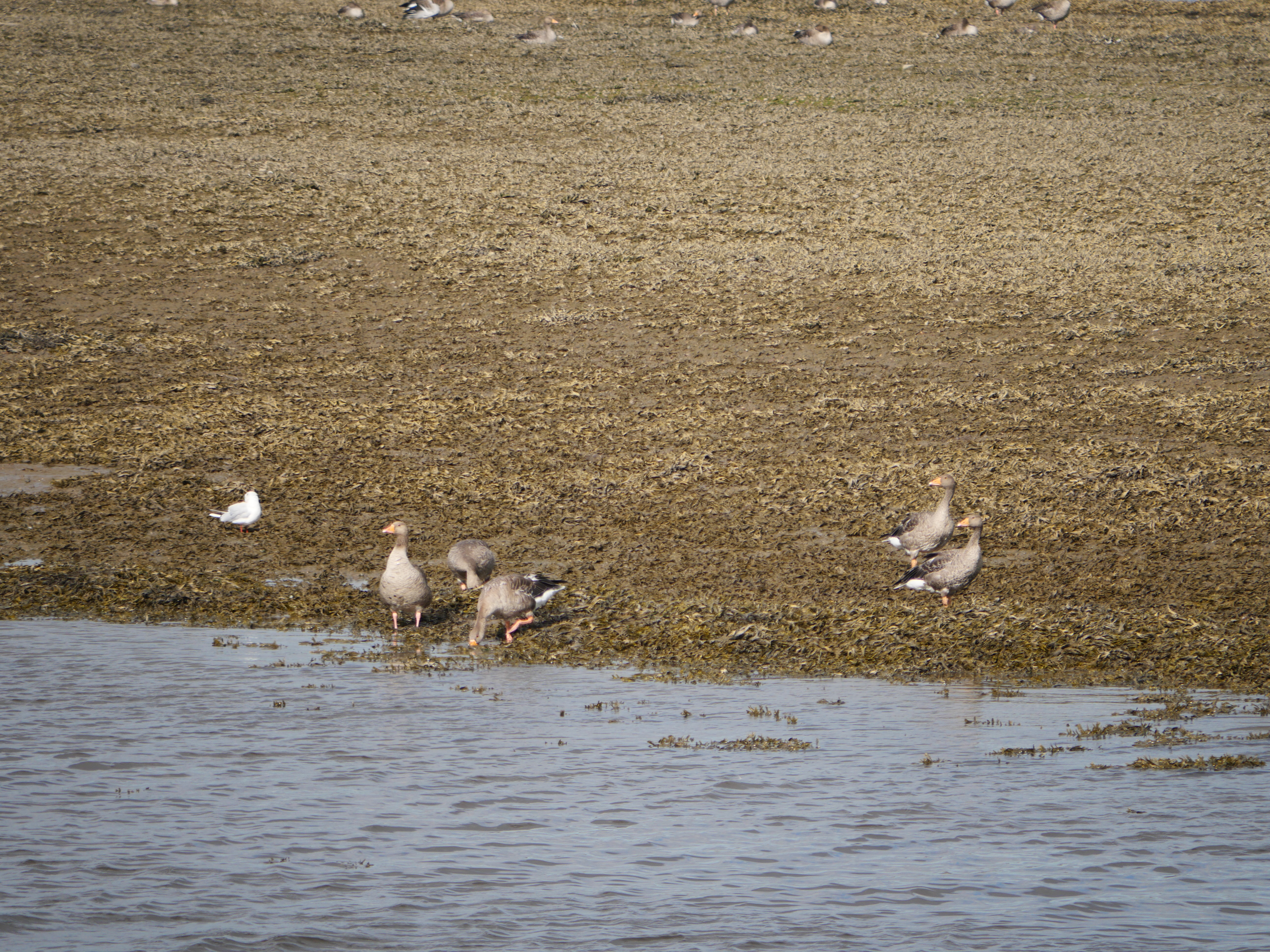
Tuesday took us to Arbroath Abbey and the Arbroath Signal Tower Museum in the morning, and to the Scottish Wildlife Trust’s Montrose Basin Visitor Centre in the afternoon.
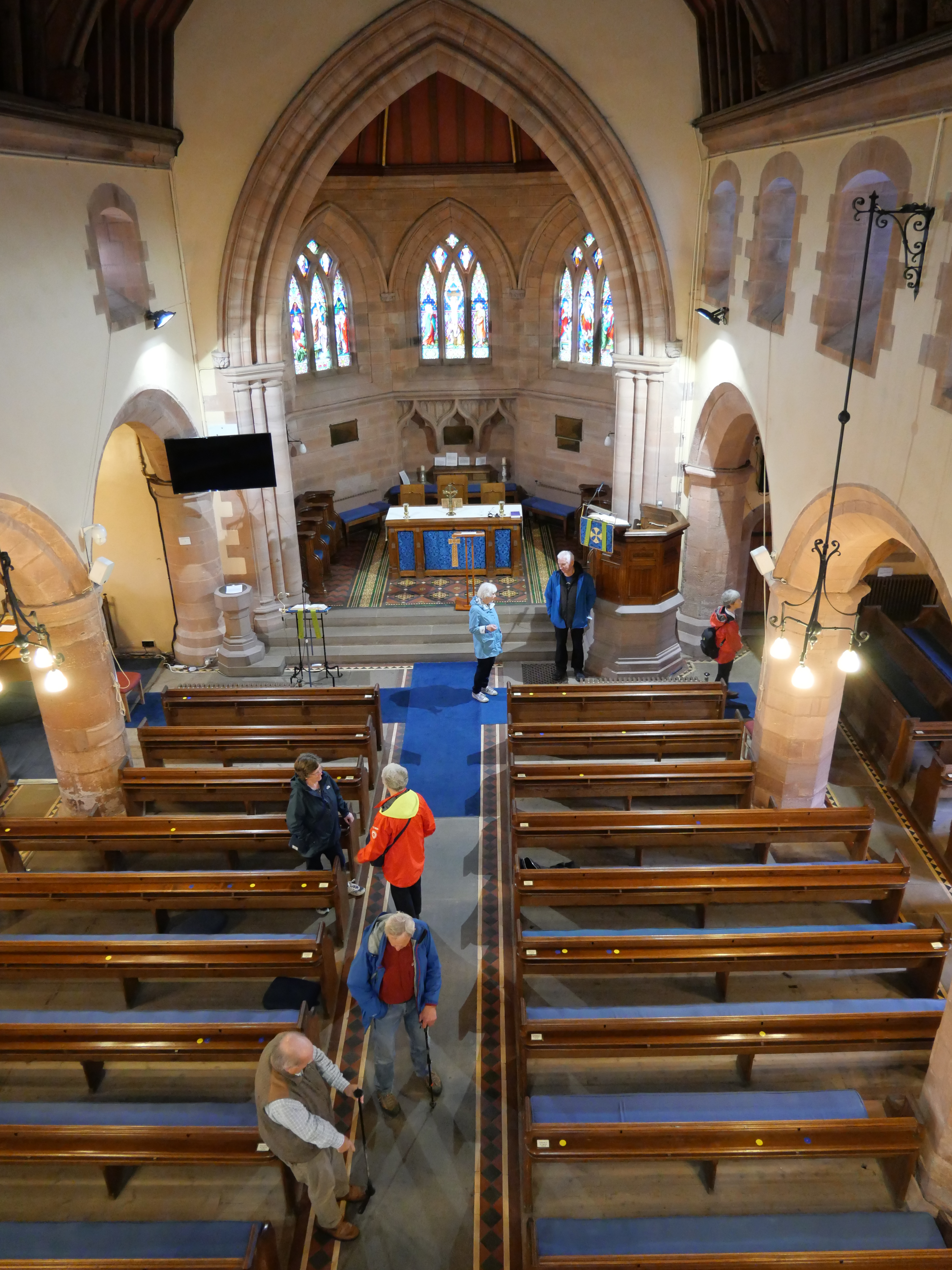
Further Pictish sculptured stones were inspected at the St. Vigeans Sculptured Stones Museum on Wednesday morning with a visit to the neighbouring St. Vigeans Parish Church before driving to Forfar to see more Pictish stones in the Meffan Institute Museum and Art Gallery.
On the final morning, we visited the National Trust for Scotland’s House of Dun and gardens just to the west of Montrose which included an informative and interesting guided tour of the interior of the house. In the afternoon, many of the fifteen members of the group managed to visit other sites on their way back to the Aberfeldy area which included the White and Brown Caterthun iron age hill forts to the north of Brechin and Restenneth Priory just to the east of Forfar.
If you would like further information on all the sites we visited, you will find a more comprehensive narrative with many more photographs on this page in our website:
On Friday, 21st January 2022, John Borland presented his talk which provided an overview of the early medieval sculpture of Highland Perthshire, following its distribution from west to east along the glens and straths, highlighting what is rare and unusual. He examined the distribution of the sculpture to see what that tells us about its cultural origins and thus assess just how “Pictish” this part of Perthshire was.
John worked as an archaeological surveyor for the Royal Commission on the Ancient and Historical Monuments of Scotland and Historic Scotland (RCAHMS) and then Historic Environment Scotland (HES) for 36 years, latterly recording Scotland’s Pictish and other Early Medieval sculpture.
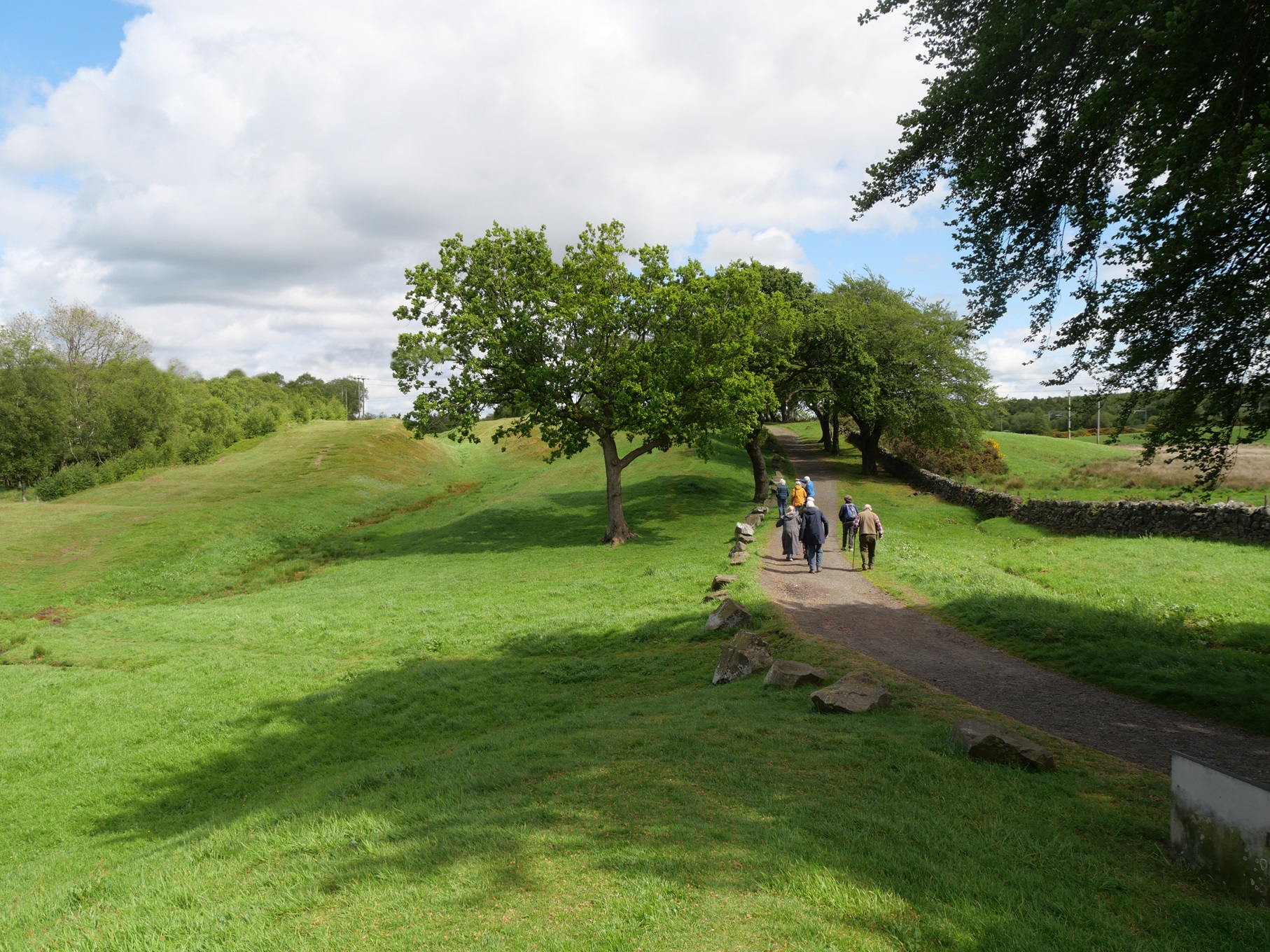
Nineteen members of the Breadalbane Heritage Society enjoyed an excellent day out on Monday, 23rd May, 2022, exploring some of the remains of the Antonine Wall, guided by expert Jim Walker who has spent many years researching it and excavating along its length. In 2019, Jim had given a fascinating talk on the wall to our members, but the associated summer trip had to be postponed due to Covid restrictions.
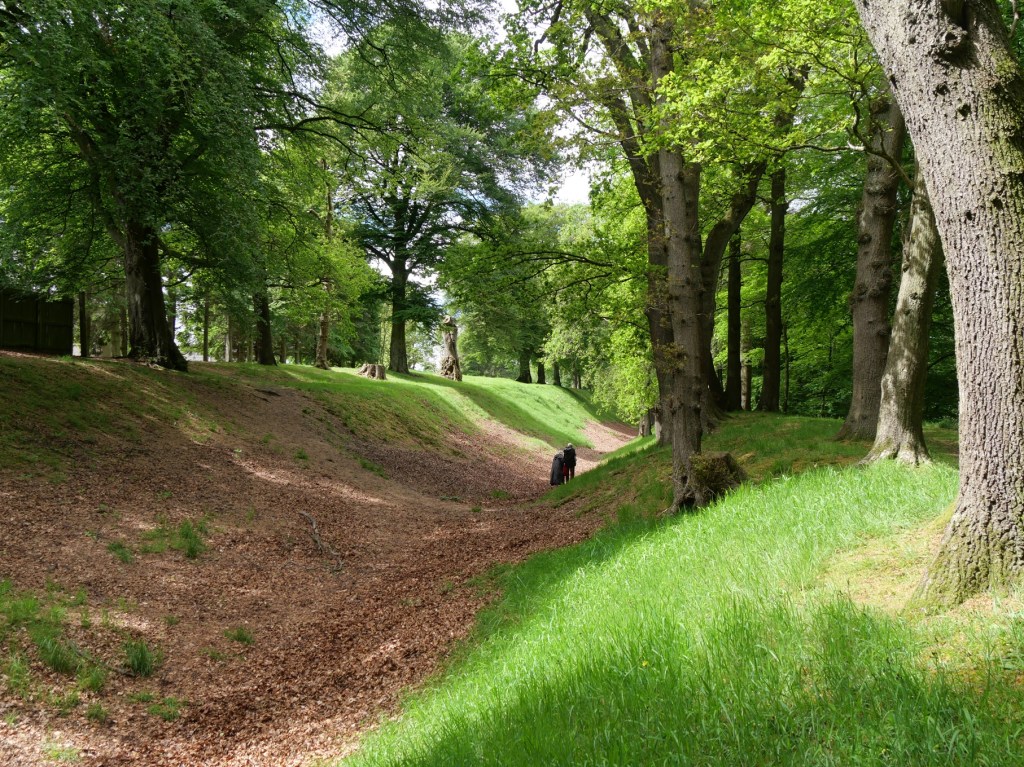
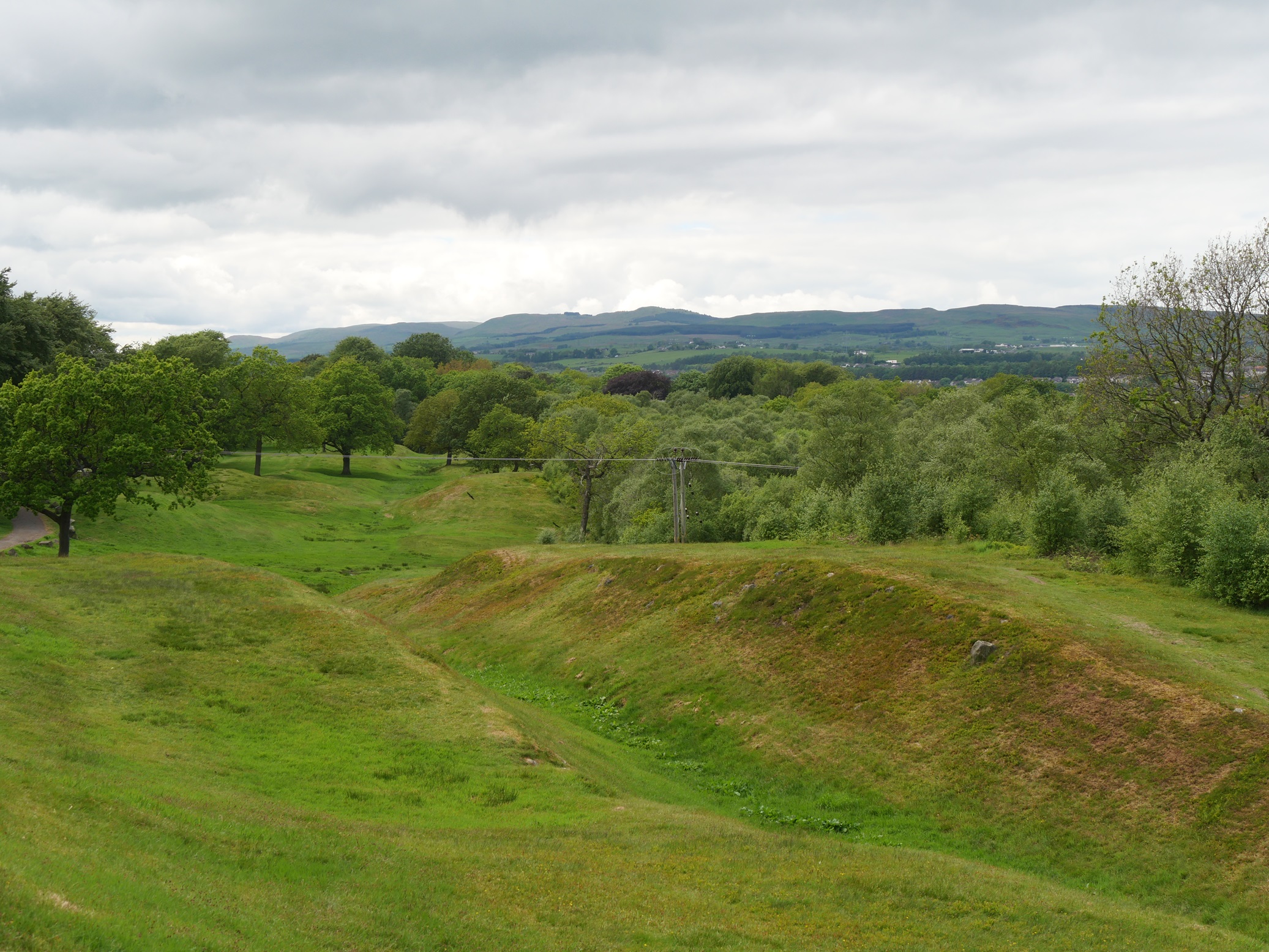
Starting in 142 AD and stretching from the Firth of Forth to the Firth of Clyde across the narrowest part of Scotland, the wall was constructed in a remarkably short time by Roman legionaries. Built of slabs of turf on a stone base, topped with a wooden palisade and aligned with a deep ditch, almost nothing now remains of the turf wall itself. However, at intervals the remains of the ditch and the substantial ramparts on which the wall was built can still be seen, plus some of the 16 forts that protected the wall and the small fortlets and signalling stations between them.
Map courtesy of OpenStreetMaps
Our tour today visited the sites of a section of the Antonine Wall and associated Roman Forts between Callendar Park in Falkirk to the east and Castlecary to the west, stopping at Watling Lodge, Rough Castle and Castlecary Fort.
First stop was the heritage centre at Callendar House in Falkirk to visit the permanent exhibition on the Antonine Wall which includes an assortment of objects ranging from large, inscribed stone distance panels which Jim explained that the Romans erected at regular intervals as each section of the wall was completed, to small finds of potsherds, gaming counters, etc., uncovered during excavations. This provided an excellent introduction to the sites we were about to visit.
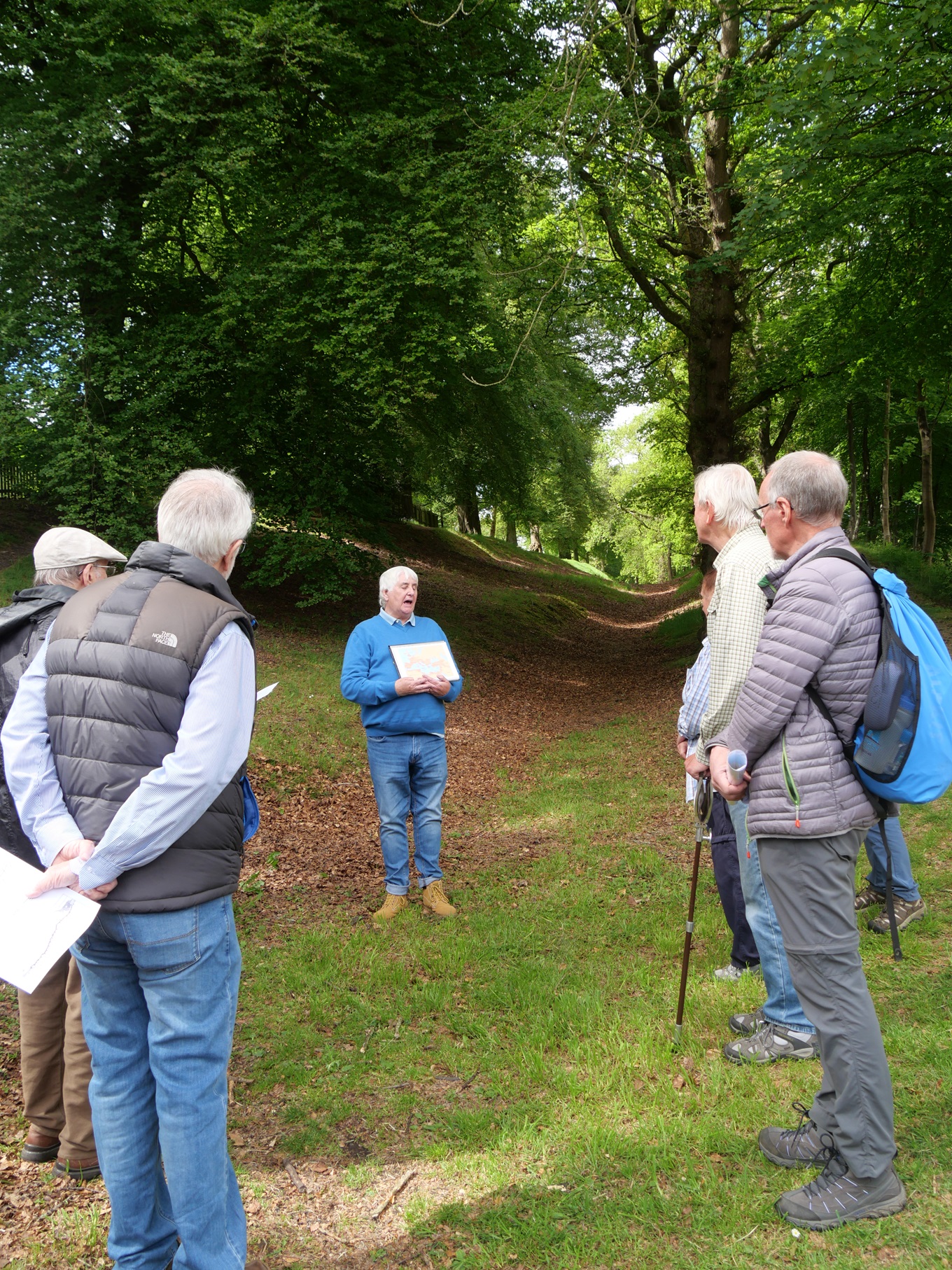
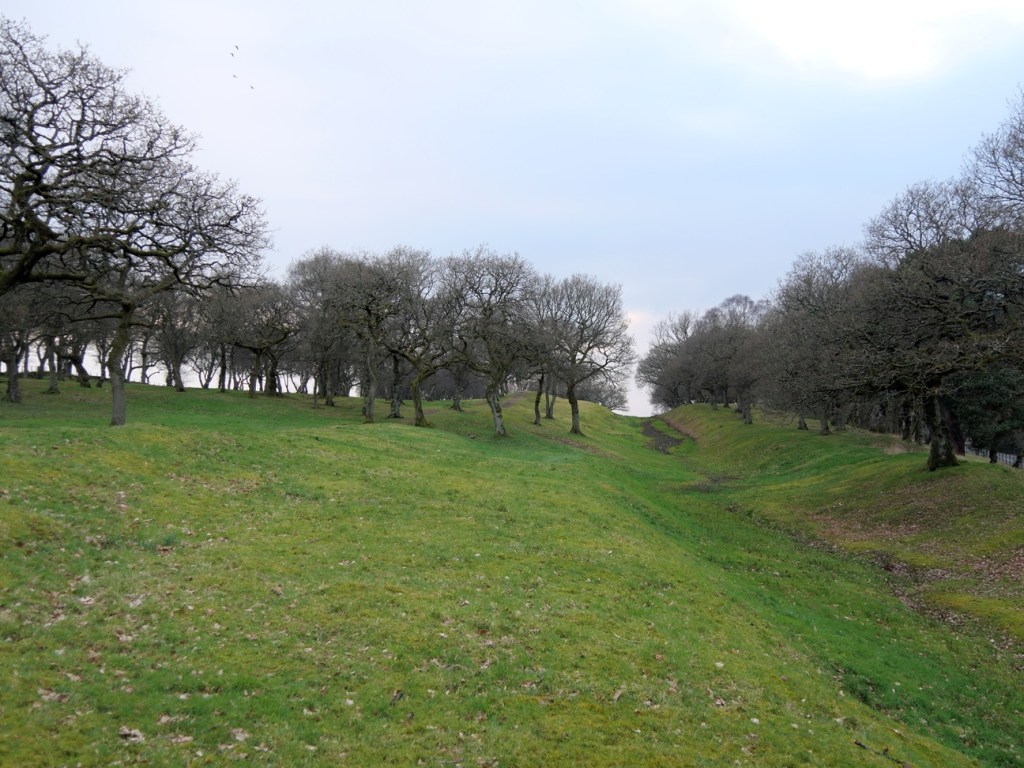
The group then moved on to an area nearby known as Watling Lodge, to explore a section of the north mound of the Antonine Wall, now covered in trees, and its deep ditch.
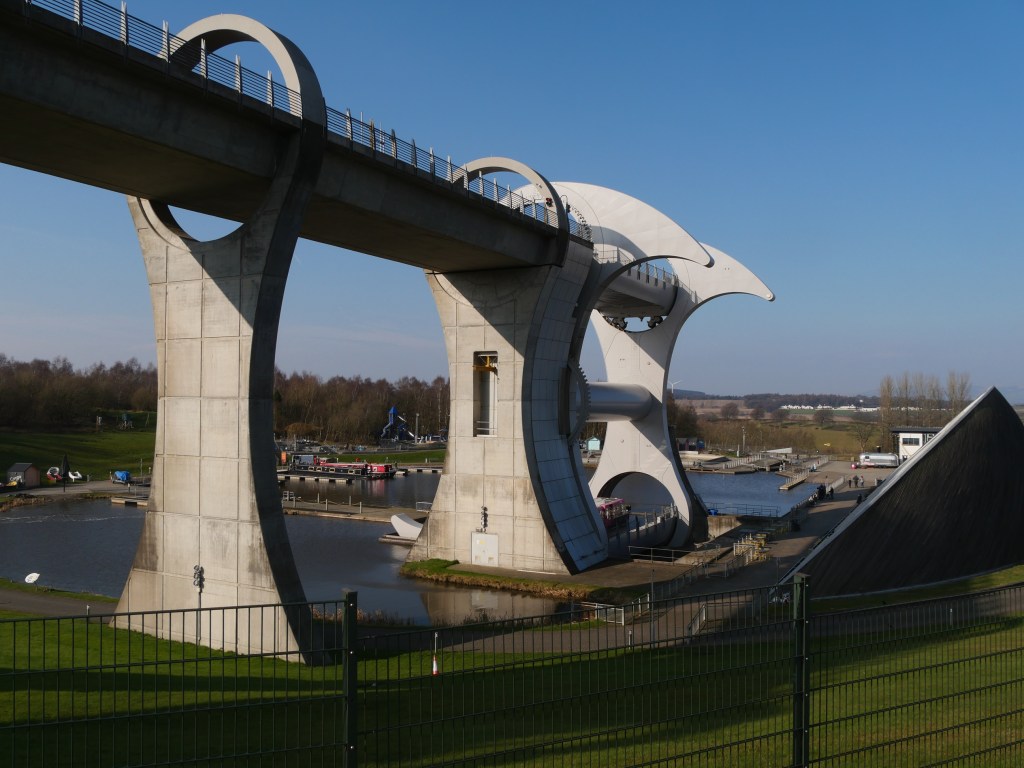
A break for lunch at the café at the Falkirk Wheel provided the opportunity to watch the canal boats being raised and lowered.
The group moved on to visit the remains of the large fort at Rough Castle beside a substantial section of rampart wall and ditch. Jim pointed out that the remains of a Roman road, now grassed over, can still be identified by its distinct camber and shallow depression on each side.
Extra protection to the wall was provided by what are known as lilia – deep holes dug in staggered rows, each containing sharpened wooden stakes as a simple but effective deterrent to attackers. A section of these pits can still be seen at Rough Castle.
Green-veined white and Orange-tip butterflies on the right were seen in this area.
Green-veined1 on the left, Orange-tip on the right
We had originally intended also to visit the Seabegs Wood section of the wall but due to very limited parking there, we had to omit it from today’s visits. However, from a previous visit, this is what we would have seen. Jim had mentioned that he had been involved in the discovery and excavation of a Roman Fort just to the west of the wood, but this is now buried under a farmer’s field.
The final stop was to see what is left of the fort at Castlecary, which had a railway line built right through it in 1841.
Jim said that there are records that, until then, parts of the stone buildings of the fort were still standing to a height that provided shelter for shepherds in bad weather, but the landowner allowed them to be completely demolished, and now there is little to see. He pointed out that many of the distinctive squared stones from the fort are now built into the 19th century wall which borders the area.
Without expert guidance it would have been hard to fit visits to such a varied and interesting range of places into a day’s tour, and the meticulous planning by Jim and Ian Stewart ensured that it was a great success. Jim Walker’s short and clear talks, as well as the extensive illustrated handouts which he provided at each site, added greatly to the enjoyment and understanding of this remarkable wall and its forts.
Thanks for this review compiled by Fran Gillespie, and photographs provided by Lesley Whitwood and Ian Stewart
Breadalbane Heritage Society talk to be presented on Zoom on Friday, 18th February 2022 by Dr. Nicki Scott, Senior Cultural Resources Advisor at Historic Environment Scotland
The survival of so many Pictish carvings highlights the long tradition of Christian worship across Angus. But the tradition of monumental display continued in the medieval period; the most famous example of this is Arbroath Abbey.
Arbroath Abbey, courtesy of Historic Environment Scotland
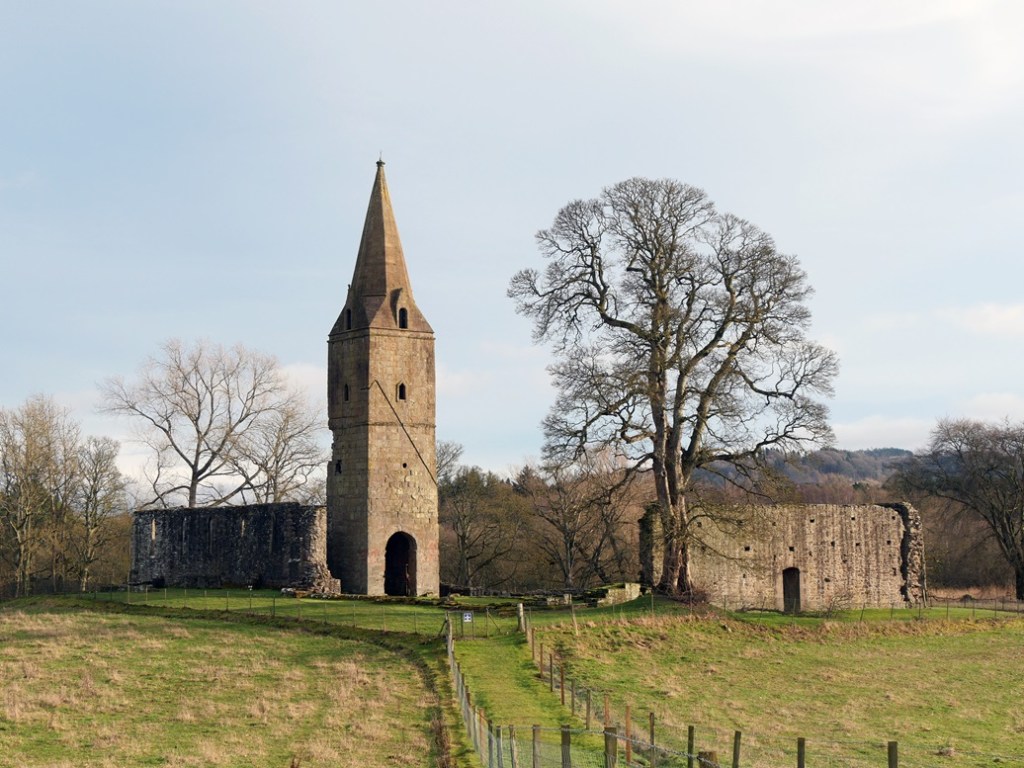
But while this royal foundation rightly draws much attention, sites such as Restenneth Priory and Maison Dieu show it wasn’t just the elites whose lives were connected to the Church.
Restenneth PrioryMaison Dieu Chapel
In this talk, Nicki will provide some insight into the lives of these foundations and the people associated with them. This talk follows on from last month’s talk by John Borland on ‘The Early Medieval Sculpture of Highland Perthshire’ but concentrates on the area of Angus.
Please note that, in order to obtain the Zoom joining instructions for this talk, you must contact Ian by email at bhsaberfeldy@gmail.com.
Although Perthshire was part of Pictland, the corpus of Early Medieval sculpture in north-west or “Highland” Perthshire comprises very few Pictish stones. The prominence of simple crosses – linear, sunken and outline – which have their origins in the Scots’ kingdom of Dál Riata, suggests not only the spread of Christianity from the west but perhaps even gradual Scottish settlement.
In this talk, John Borland will give an overview of the early medieval sculpture of Highland Perthshire, follow its distribution from west to east along the glens and straths, highlighting what is rare and unusual. He will examine the distribution of the sculpture to see what that tells us about its cultural origins and thus assess just how “Pictish” this part of Perthshire was.
John Borland worked as an archaeological surveyor for the Royal Commission on the Ancient and Historical Monuments of Scotland and Historic Scotland (RCAHMS) and then Historic Environment Scotland (HES) for 36 years, retiring as Measured Survey Manager in May 2020. In that time, John had the opportunity to survey almost every type of archaeological and architectural monument, from Neolithic chambered cairns to WWII coastal batteries and everything in between, including castles, churches, croft houses and country houses. However, the main focus of his work latterly was recording Scotland’s Pictish and other Early Medieval sculpture. John has been a member of the Pictish Arts Society for more than 20 years and is the current PAS President.
To register for the talk and to receive the Zoom joining details, you must send an email to Ian at bhsaberfeldy@gmail.com.
















 Breadalbane Heritage Society
You must be logged in to post a comment.