Ancient Magnificence: Arbroath Abbey and Beyond

Breadalbane Heritage Society talk to be presented on Zoom on Friday, 18th February 2022 by Dr. Nicki Scott, Senior Cultural Resources Advisor at Historic Environment Scotland

The survival of so many Pictish carvings highlights the long tradition of Christian worship across Angus. But the tradition of monumental display continued in the medieval period; the most famous example of this is Arbroath Abbey.  

Arbroath Abbey, courtesy of Historic Environment Scotland

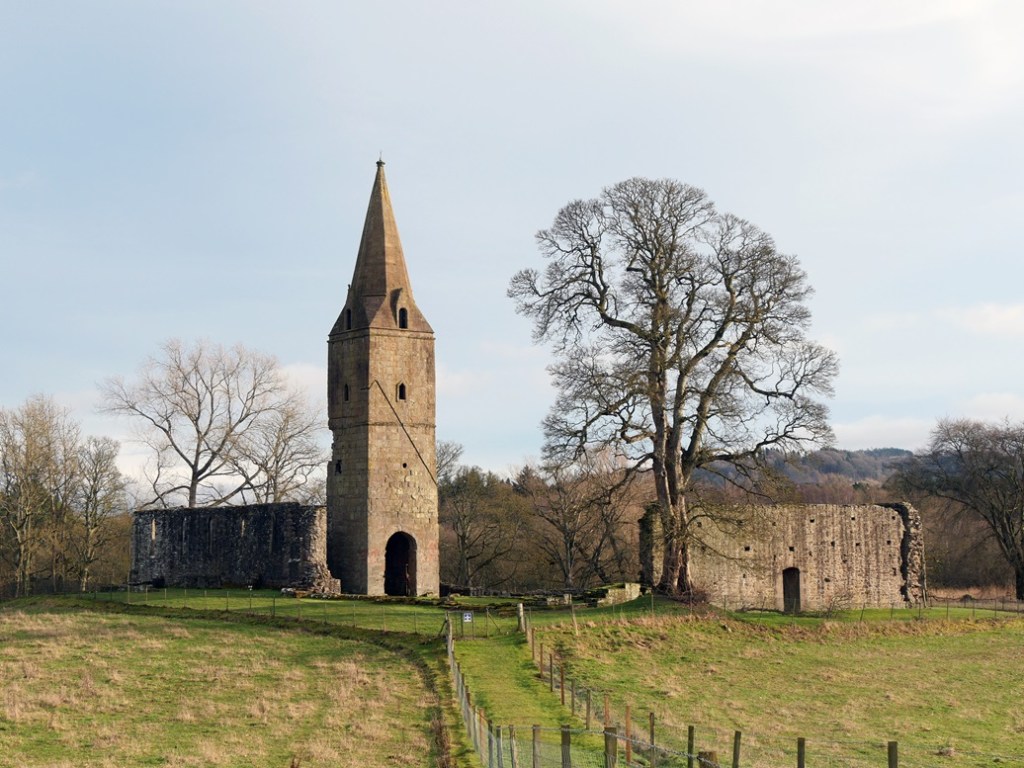
But while this royal foundation rightly draws much attention, sites such as Restenneth Priory and Maison Dieu show it wasn’t just the elites whose lives were connected to the Church.  

Restenneth Priory

Maison Dieu Chapel

In this talk, Nicki will provide some insight into the lives of these foundations and the people associated with them. This talk follows on from last month’s talk by John Borland on ‘The Early Medieval Sculpture of Highland Perthshire’ but concentrates on the area of Angus.

Please note that, in order to obtain the Zoom joining instructions for this talk, you must contact Ian by email at bhsaberfeldy@gmail.com.

The Early Medieval Sculpture of Highland Perthshire

Although Perthshire was part of Pictland, the corpus of Early Medieval sculpture in north-west or “Highland” Perthshire comprises very few Pictish stones.  The prominence of simple crosses – linear, sunken and outline – which have their origins in the Scots’ kingdom of Dál Riata, suggests not only the spread of Christianity from the west but perhaps even gradual Scottish settlement.

In this talk, John Borland will give an overview of the early medieval sculpture of Highland Perthshire, follow its distribution from west to east along the glens and straths, highlighting what is rare and unusual.  He will examine the distribution of the sculpture to see what that tells us about its cultural origins and thus assess just how “Pictish” this part of Perthshire was.

John Borland worked as an archaeological surveyor for the Royal Commission on the Ancient and Historical Monuments of Scotland and Historic Scotland (RCAHMS) and then Historic Environment Scotland (HES) for 36 years, retiring as Measured Survey Manager in May 2020.  In that time, John had the opportunity to survey almost every type of archaeological and architectural monument, from Neolithic chambered cairns to WWII coastal batteries and everything in between, including castles, churches, croft houses and country houses.  However, the main focus of his work latterly was recording Scotland’s Pictish and other Early Medieval sculpture.  John has been a member of the Pictish Arts Society for more than 20 years and is the current PAS President.

To register for the talk and to receive the Zoom joining details, you must send an email to Ian at bhsaberfeldy@gmail.com.

Schiehallion, ‘Weighing’ the World and Contour Lines 

Our next meeting takes place in Breadalbane Community Campus at 7.30pm on Friday 19th November.  The speaker will be Dr Liz Auty, East Schiehallion Property Manager for the John Muir Trust,  on the subject:  “Schiehallion:  The attraction of mountains, ‘weighing the world’ and contour lines”.  Doors open at 7pm and the talk will start at 7.30pm.  

Dr Liz Auty will discuss Maskelyne’s 1774 expedition to Schiehallion, the people, the experiment and the mountain and her work as property manager for the John Muir Trust.

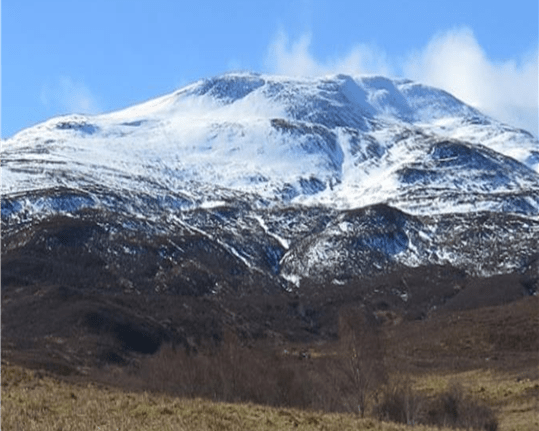
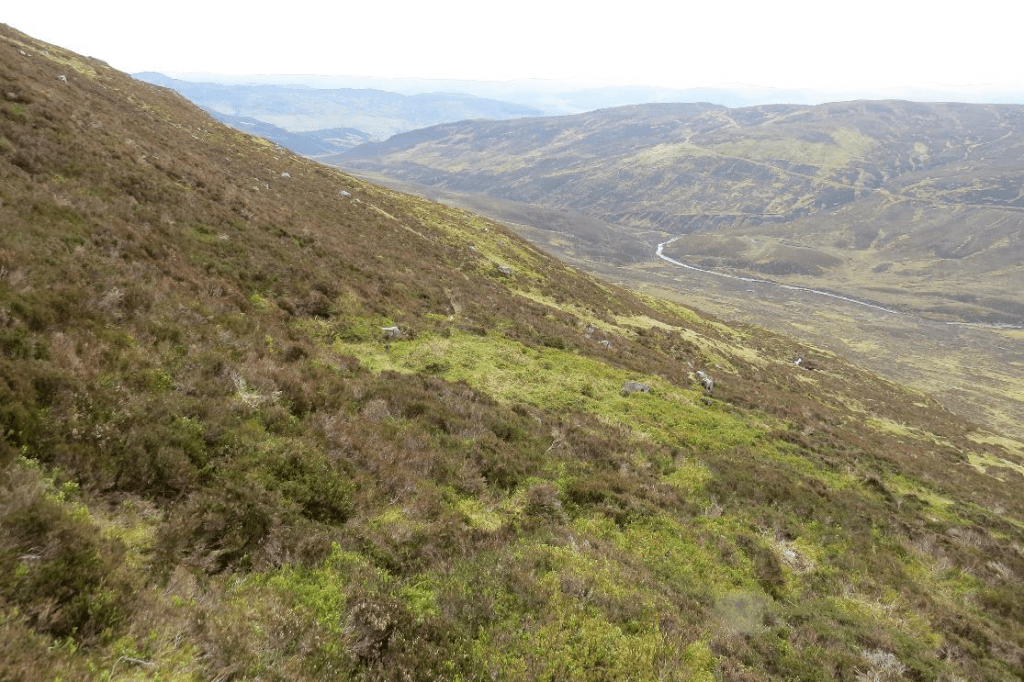
Schiehallion from the Braes of Foss

The Schiehallion experiment was set up to determine the mass and mean density of the Earth. The experiment involved measuring the tiny deflection of a pendulum due to the gravitational attraction of a nearby mountain. Schiehallion was considered the ideal location after a search for candidate mountains, thanks to its isolation and almost symmetrical shape.

Maskelyne’s south observatory site on the side of Schiehallion

The Campus management have provided guidance regarding the Covid-related procedures that will have to be followed on the night:

  • Face coverings must be worn when moving around within the building but can be removed once seated;
  • Hand sanitiser should be used on entering and leaving the building and when moving to a different location;
  • The Hall will be as well ventilated as possible ;
  • Unfortunately we will not be able to serve any refreshments.  ;
  • We are required to keep a register of all attendees as we will be responsible for any contact tracing in the event of a positive case.  (Lesley Whitwood is the BHS Covid Officer). 

‘Pitlochry in Threes’: A talk by Colin Liddell

Due to the Covid restrictions in place at the time, we were not able to hold any of our 2020-21 winter season of talks ‘in person’ at our normal venue in the Breadalbane Community Campus. Consequently, in order to offer a programme of talks to our membership, we ventured into the unknown world for us of online Zoom presentations.

From the October talk onwards, we recorded these talks to make them available to a wider audience, but we were not sufficiently prepared to do this for Colin Liddell’s talk on ‘Pitlochry in Threes’ which opened our winter season in September 2020. However, we are delighted that Colin subsequently was keen to present his talk once again, but without an audience in this instance, and have it recorded.

Colin is a local solicitor and historian who in recent years has presented four talks to the Society on Pitlochry and General Wade’s roads. This current talk is an eclectic dip into the assortment box of Pitlochry’s local history, by looking at lots of groupings of three things to show how Pitlochry has been shaped over the years.  Topics and artefacts included the Lude Harp, Black Spout toggle and the Clach na Brataich.

The video is approximately 27 minutes long and can be viewed below:

If you wish to view this video at a larger size, click on the ‘full screen’ button at the bottom right-hand corner of the images above:

Salmon and Salmon Fishing in the River Tay: Past, Present and Future

Dr. David Summers is the Fisheries Director of the Tay District Salmon Fisheries Board and has over 30 years’ experience in the field of  salmon and freshwater fisheries research and management. 

On Friday, 17th September he opened our 2021-22 winter season of talks with a talk on talk entitled ‘Salmon and Salmon Fishing in the River Tay: Past, Present and Future’. Due to on-going Covid restrictions, we weren’t allowed to hold this talk ‘in person’ in our normal venue of the Breadalbane Community Campus in Aberfeldy, and presented it online on Zoom instead. 36 people registered for, and attended, this talk, of which 12 were non-members of our Society.

David’s talk encompassed the life cycle of the salmon, the drastic reduction in salmon numbers, current scientific research studies and findings, and local socio-economic benefits. David provided an overview of the status of the River Tay’s salmon population and fisheries, with an emphasis on how things compare with the past and what the future might hold. Particular emphasis was placed on issues local to the Breadalbane area such as hydro development.

Two versions of the recording of the talk are available to view.  The first is approximately one hour long and contains just the talk.  The second includes an additional subsequent 30-minute Q&A session providing further supplementary information.  Both of these videos can be viewed below:

Full Talk with the Q&A session (90 minutes):

Only the talk  (60 minutes):

If you wish to view these videos at a larger size, click on the ‘full screen’ button at the bottom right-hand corner of the images above:

Battles of the Three Muirs

We are delighted to confirm that our  meeting on 15 October will take place “in person” in the Breadalbane Community Campus Assembly Hall.   Our speaker will be Rob Hands, a retired geography teacher and joint founder of Tippermuir Books Ltd., publishing local and military history books.  In his talk, entitled “Battles of the Three Muirs”, Rob will explore  the outstanding local battles of Dupplin Moor (1332), Tippermuir (1644) and Sheriffmuir (1715) using maps and photographs to get a feel for the landscapes that determined the battle outcomes. Please see attached poster for additional information.   Doors open at 7pm and the talk will start at 7.30pm.  If you may be interested in purchasing any of Rob’s books he will be bringing some stock to sell on the night, therefore please ensure you have cash or cheque with you.

The Campus management have provided guidance regarding the Covid-related procedures that will have to be followed on the night:

  • Face coverings must be worn when moving around within the building but can be removed once seated;
  • Hand sanitiser should be used on entering and leaving the building and when moving to a different location;
  • The Hall will be as well ventilated as possible ;
  • Unfortunately we will not be able to serve any refreshments;
  • We are required to keep a register of all attendees as we will be responsible for any contact tracing in the event of a positive case.  (Lesley Whitwood is the BHS Covid Officer). 

Membership:    Thank you to all who have already paid their subscriptions either online or by cheque.  There will be an opportunity to pay your membership subscriptions at the meeting, either cash or cheque, and it is not necessary to complete a new membership form unless your contact details have changed.     We are not issuing membership cards this year, however all members will receive email confirmation of their membership and an electronic copy of the Prospectus, hard copies of which will also be available at the meeting.  As in previous years visitors will be asked for a donation of £4 on the night.

Looking forward to seeing many of you at the Campus on Friday 15th October.

BHS Visit to Iona

In what may be the Society’s first-ever offshore excursion, fourteen members visited the tiny island of Iona for three nights at the beginning of September. This long-awaited trip had been booked at the St Columba Hotel in 2019 for September 2020 but had to be postponed due to lockdown last year.

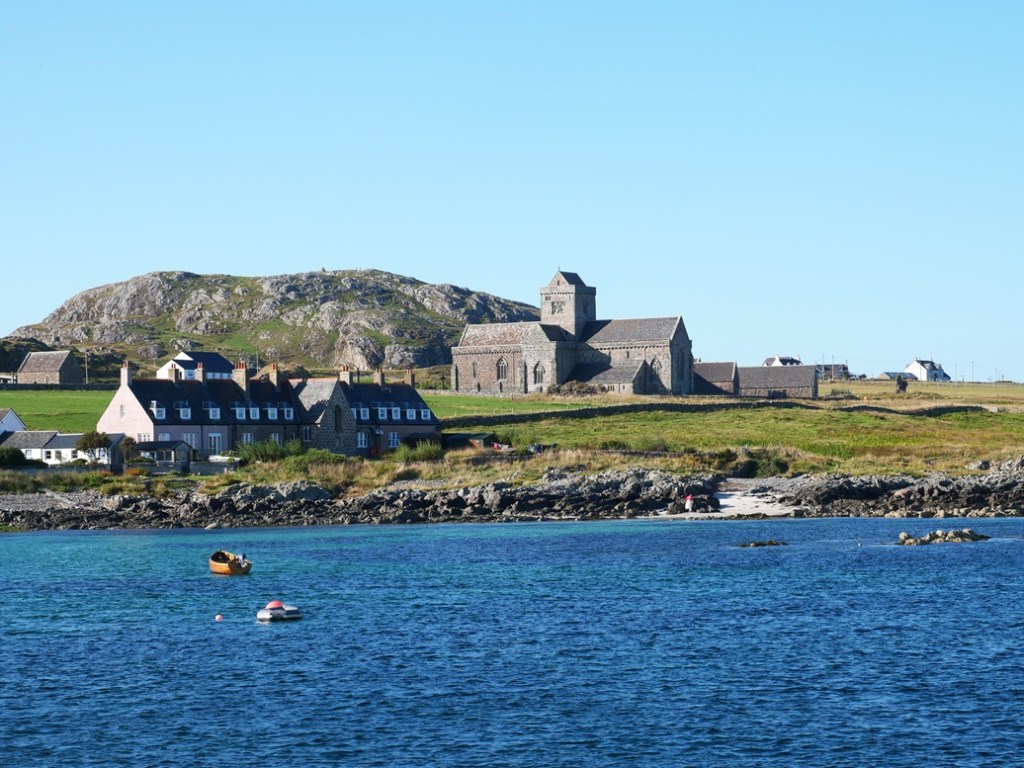
Iona Abbey with Dùn Ì in the background

Lesley Whitwood  organised the three days with an ideal mixture of group activities and independent exploring.  Some attended the services held nightly or in the morning by the Iona Community in the 12th century Benedictine abbey, and as a group we visited the wonderfully restored abbey buildings, its recently updated museum and the Nunnery and went for varied walks over the beautiful island scenery.

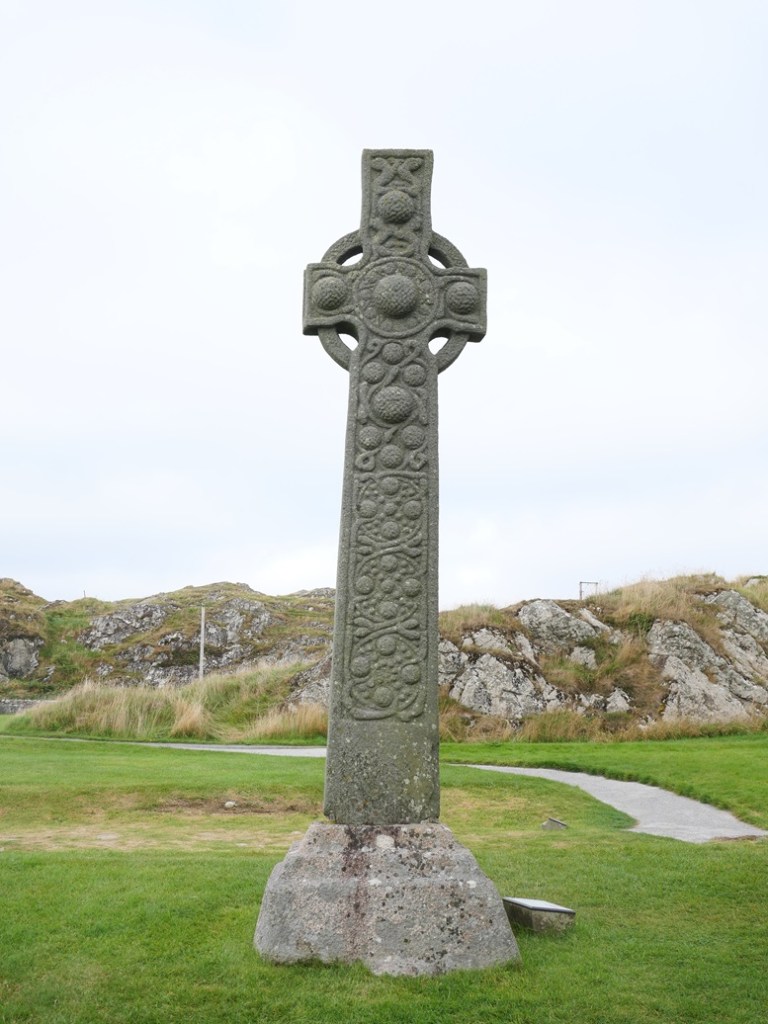
St. Martin’s Cross

We were blessed with warm weather, sometimes bright sunshine, sometimes cloudy, but thankfully not a drop of rain. Everyone agreed that, thanks to Lesley and to Sally Rose who undertook all the bookings, the trip was such a success that annual three-day excursions should take place – next year’s special multi-day trip to Angus is already in the planning. 

For a more comprehensive, illustrated review of our visit, please find out more here: https://breadalbane-heritage.org.uk/iona-september-2021

Text by Fran Gillespie, photographs provided by Lesley Whitwood and Ian Stewart

Our new 2021-22 Season of Winter Talks and Summer Excursions

After 18 months of Covid restrictions with all our 2020-21 winter programme of talks having been presented online by Zoom, we were hopeful that we would be able to present our new season of winter talks commencing in September 2021 ‘in person’ in our regular venue, the Breadalbane Community Campus in Aberfeldy. However, we were informed that public use of the main hall in the Breadalbane Campus complex would only be possible from the beginning of October. Consequently, our first winter talk on the 17th September was presented online using Zoom, but we were able to return to the Breadalbane Campus for our October talk. We are hopeful that the November and March talks will also still be able to take place in the Breadalbane Campus.

Taking into consideration the likelihood of adverse winter weather during the months of January and February making travel difficult and from comments and suggestions from our members that they are unwilling to venture out on cold, wet winter evenings, we have decided for this season to present the January and February talks online by Zoom. As we hold the talks on the third Friday of the winter months, there is not a talk in December as it would come very close to Christmas. Joining details for each Zoom meeting will be provided prior to each talk.

2021-22 Programme of Winter Talks

Friday 17th September 2021: Dr. David Summers – ‘The Atlantic Salmon’ (by Zoom)

Friday 15th October 2021: Rob Hands – ‘Battles of the Three Muirs’

Friday 19th November 2021: Dr. Liz Auty – ‘The Attraction of Mountains, Schiehallion, ‘Weighing’ the World and Contour Lines’

Friday 21st January 2022: John Borland – ‘The Early Medieval Sculpture of Highland Perthshire’ (by Zoom)

Friday 18th February 2022: Dr. Nicki Scott:  ‘Ancient Magnificence: Arbroath Abbey and beyond’ (by Zoom)

Friday 18th March 2022: Annette Carruthers:  ‘James MacLaren and the Arts and Crafts Movement’

2022 Programme of Summer Excursions

In association with the programme of winter talks, we also run a short season of half and full-day excursions from late May to mid-July, ideally to locations referred to in some of the winter talks.

Amongst the locations we are currently considering are:

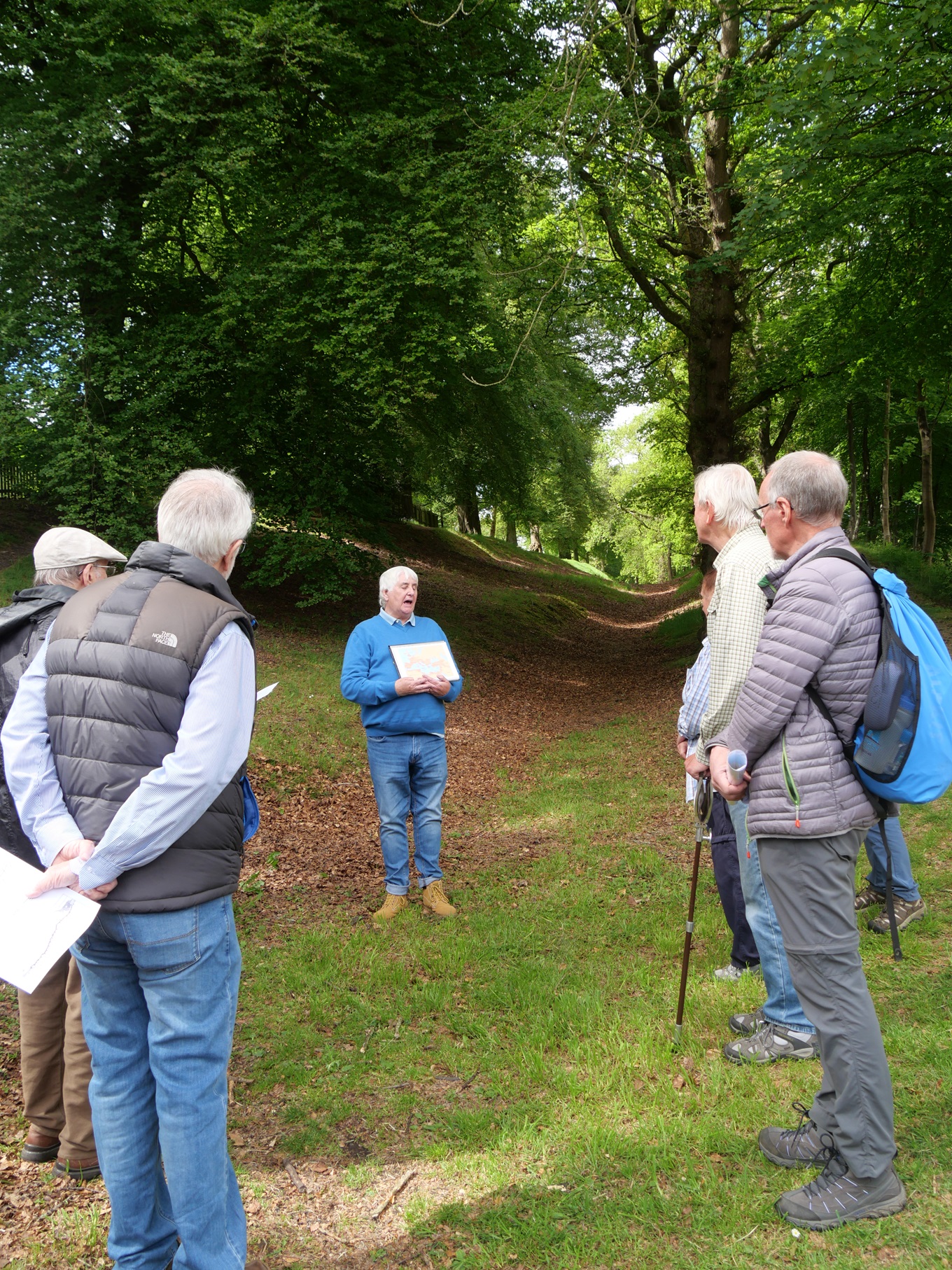
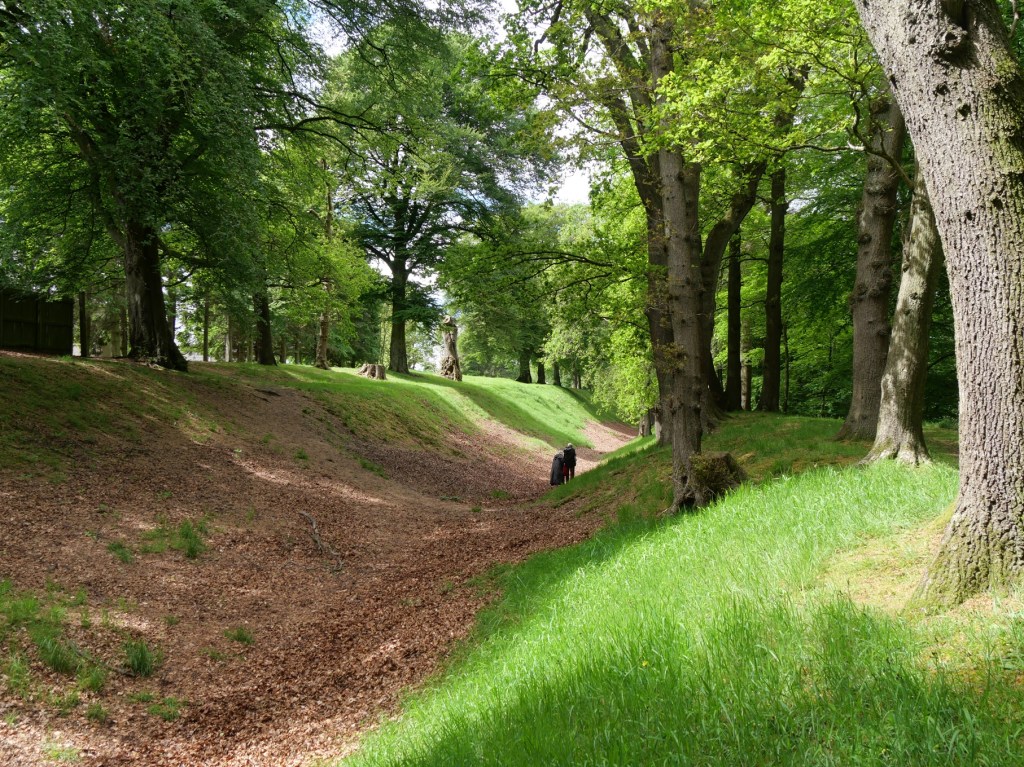
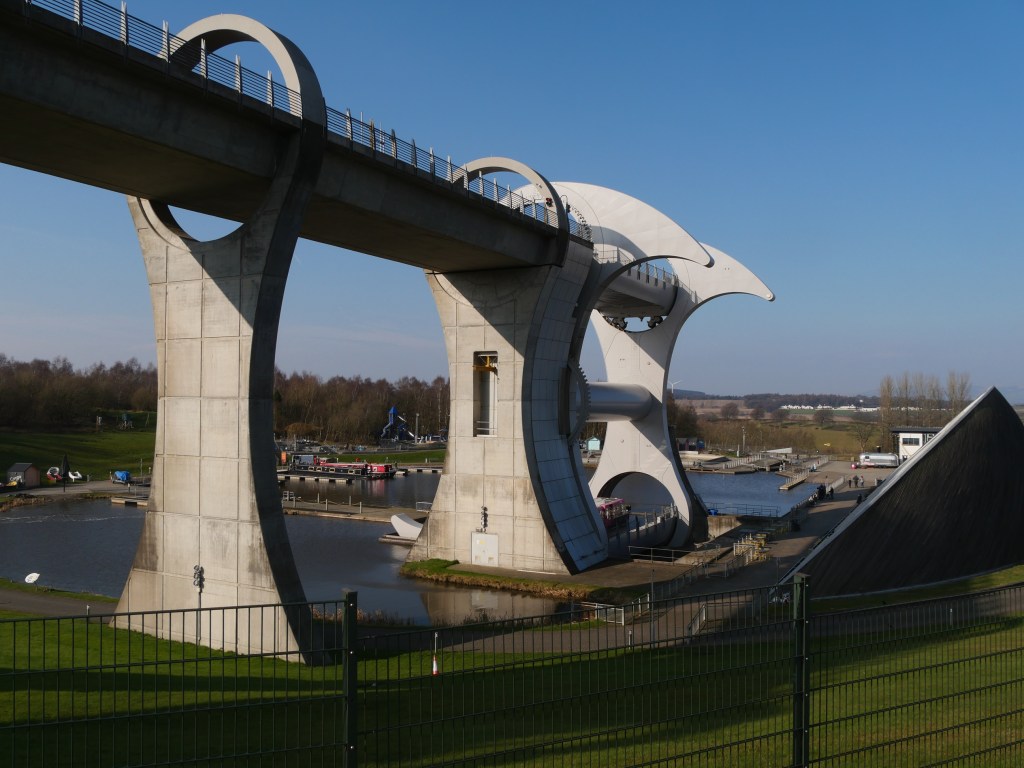
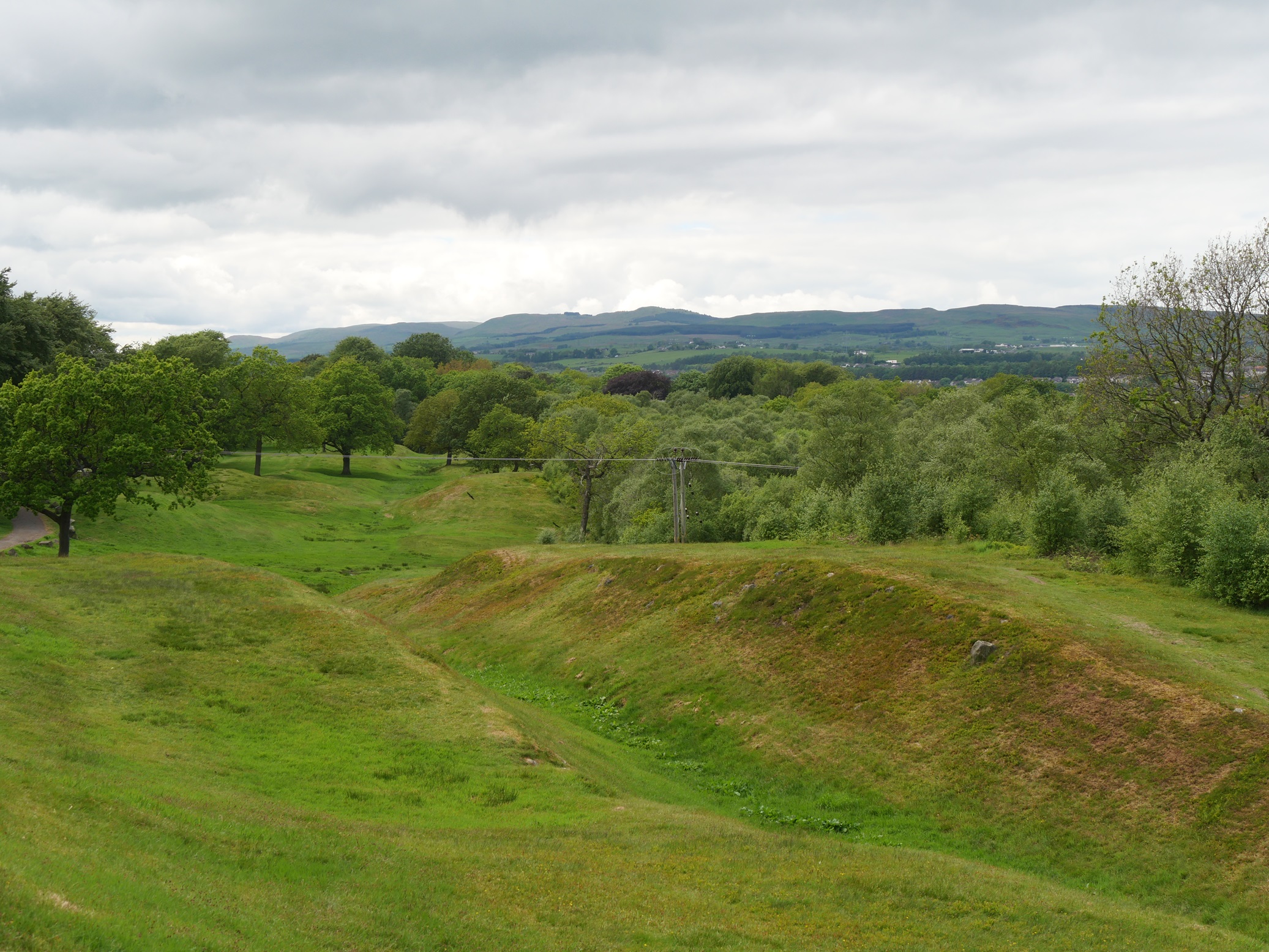
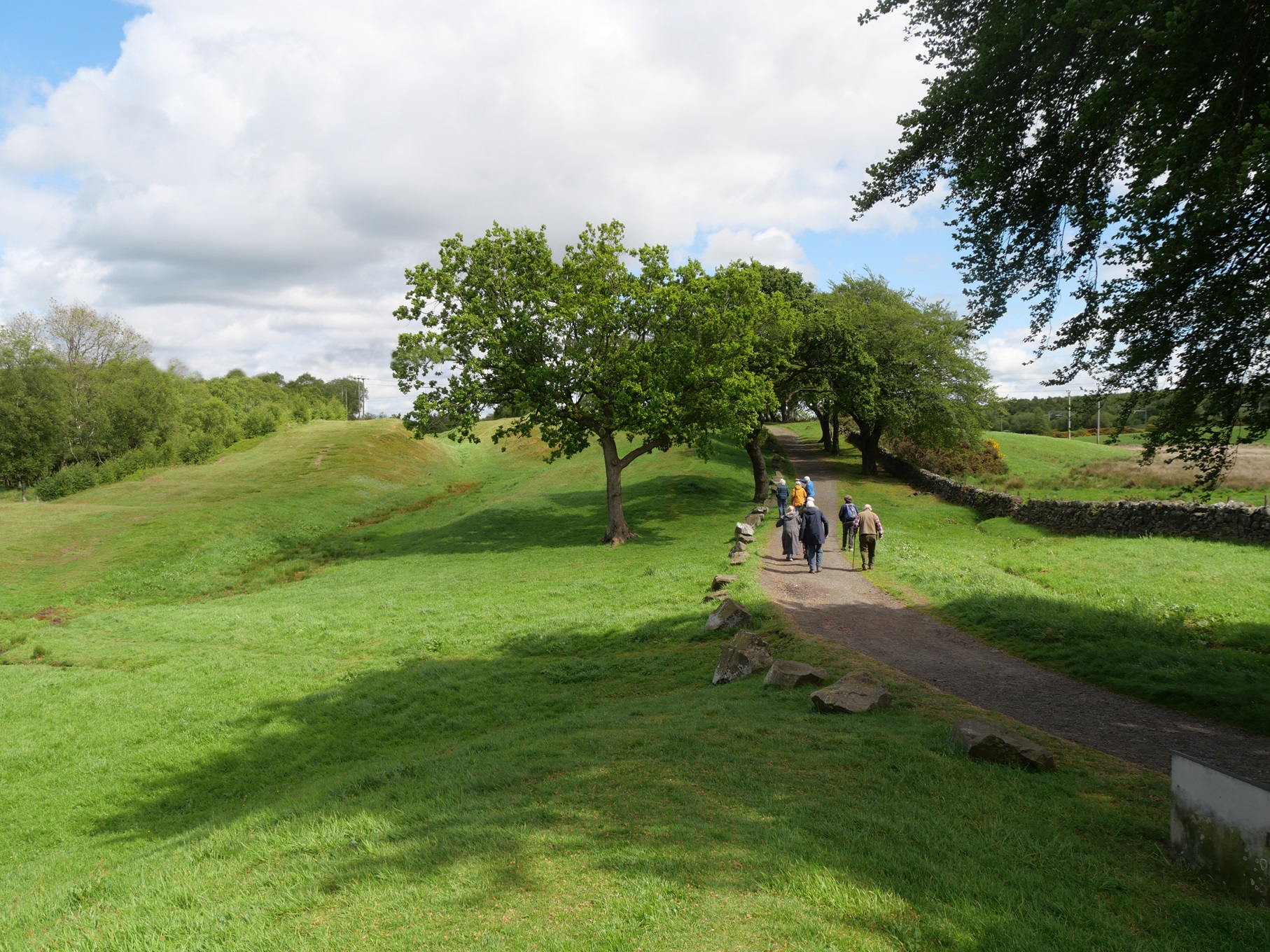
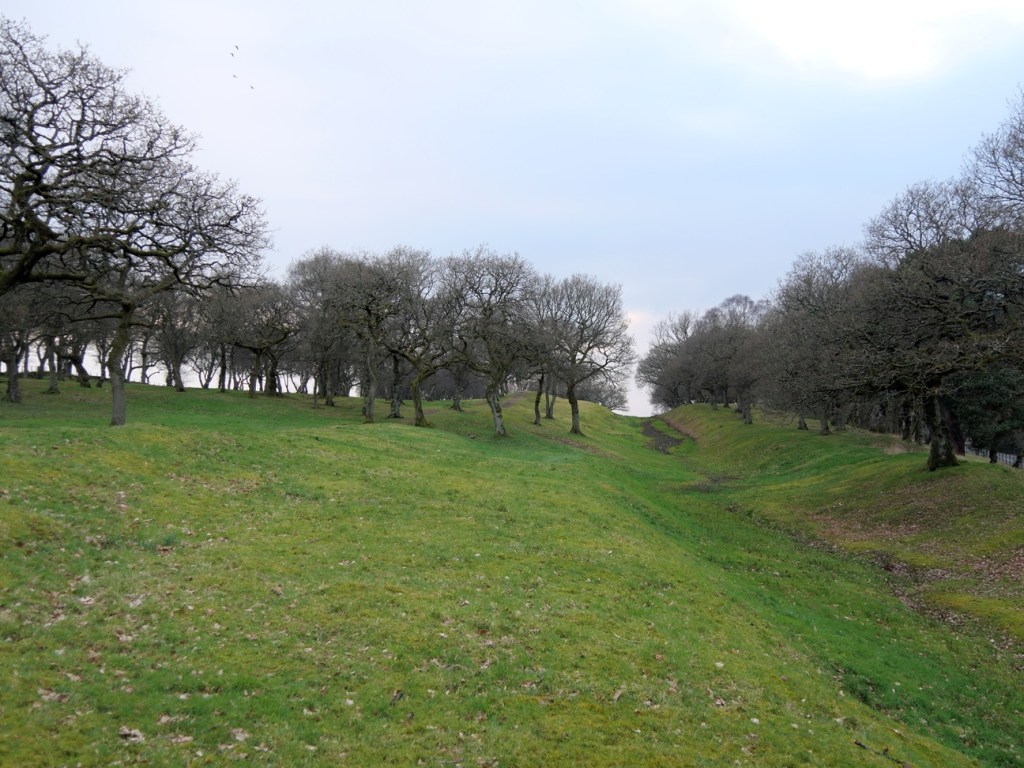
  • a full-day trip to visit Watling Lodge, Rough Castle Fort, Seabegs Wood and Castlecary Fort on the Antonine wall, led by Jim walker who presented an excellent informative talk to the Society on the Antonine Wall in November 2019;
  • a visit led by Dr. Liz Auty to look at the traces of the social and natural history evident on the the lower levels around Schiehallion;
  • a visit to the Duplin Moor and Tippermuir battlefields to the west of Perth, led by Rob Hand following his talk on these battles in October.

In addition, we are considering a three or four-day trip to Angus in late-August to visit a number of HES and other sites, some of which will be referred to in John Borland’s January talk and included in Dr. Nicki Scott’s February talk.

These are our preliminary excursion proposals and may be subject to change. Further details will be confirmed early next year.

Refer to the Events page for further information on the forthcoming season of Winter Talks.

Back to Summer Visits!

At last! Our first summer outing since July 2019! On the 9th June we held our first public summer visit of 2021 to the Menzies Mausoleum in the Old Kirk of Weem and to the Walled Gardens at Castle Menzies which includes the upper Archibald Menzies Garden.  12 members made up the party, which was limited in size due to Covid restrictions. 

Menzies Mausoleum in the Old Kirk of Weem

Clare Thomas gave a splendid introduction to the Mausoleum which we then explored.

The party then went up to Walled Garden at Castle Menzies to learn from Fran Gillespie about its establishment and the way in which it has changed over the years.

Castle Menzies with the eastern edge of the walled garden to the right
The walled garden viewed from the entrance road to the castle
Congregating at the monumental gates to the walled garden
The upper Archibald Menzies garden

How lovely it would be to have the garden restored to its former glory! 

Overall, the visit to the Menzies Mausoleum and the Castle Menzies Garden was very successful particularly as many of the participants were new members.  The offer of refreshments afterwards in the castle Tea Room with coffee and cake meant that our new members then had a chance to chat to others, form links and get to know each other. That was made easier by it being only a small group.

Now read on for further historical information on both the Old Kirk of Weem and the Castle Menzies Walled Garden.

Old Kirk of Weem – Menzies Mausoleum

According to tradition, the first church at Weem was established by St. Cuthbert around the year AD 650. Cuthbert founded an oratory and cistern at Chapel Rock (the Rock of Weem) above the village. The site was restored by Sir David Menzies around 1440 when he retired to live as a hermit there. The site was later renamed St. David’s Well after Sir David.

The first mention of Weem as a Parish is in Boiamund’s Taxatio, preserved in the Vatican. In this record, popularly known as Bagimont’s Roll, is set out a list of parishes and tithes collected from them in 1275 and 1276 by Boiamund de Vicci, Nuncio, sent out by the Pope to gather funds for the relief of the Holy Land. Listed is ‘Ecclesia de Weem, 30 sols’, giving revenue of ‘15 lib‘.

The church was under the patronage of the Earls of Atholl until 1464.

The early medieval building was replaced by the present building around 1488 by Sir Robert Menzies, the 8th Chief of Clan Menzies. An alternate version of events suggests that the church was built by John Menzies, the Clan Chief, after he was granted the Barony of Weem in 1451.  Menzies family members were buried at Weem church from at least the 15th century.

The church was altered in 1609 and again in the 18th century. Given its links to St Cuthbert it is not surprising that the kirk was originally dedicated to him, but it was later referred to as St. David’s Church after Sir David Menzies (though he was never canonised). Neither dedication is used today and the church is simply referred to as the Old Kirk of Weem.

Inside the church are two large sandstone crosses brought here from the 8th century monastic settlement at Dull, a few miles to the west.  They were part of a series of four stones that marked the sanctuary boundary of a Celtic monastery established by St Cuthbert. One of the other two stones can still be found in the centre of Dull village.

The Menzies Mausoleum at Weem was originally a simple rectangular stone church, probably thatched and dating to the late 15th century.  Features of interest include the aumbries set into the wall with carvings above each, probably intended to hold holy water. In the post reformation period, the altar and chancel screen were removed and a pulpit then became the focus of the worshippers’ attention.  Many structural alterations have taken place over the succeeding centuries, including raising the height of the roof and adding a gallery, now demolished.

No longer in use as a church, the building houses a varied array of tombs and memorials of members of the Menzies clan, among which the most spectacular is the elaborately carved Menzies Monument, erected in 1616 by Sir Alexander Menzies as a tribute to his female ancestors.

Also of note is a large painted hatchment facing the visitors as they enter, with paper tears pinned to the edging, commemorating the sad death in 1845 of Caroline Elizabeth Menzies aged only 15.  

Some Menzies clan members visiting the kirk, guided by Tommy Pringle, on the occasion of an annual clan gathering in August

Tommy Pringle hosted a video tour of the Mausoleum in 2020, and you can view it here: https://1drv.ms/v/s!Aphsr_SIsNYEhNJ7gukidNE-DkVQ_A?e=Ah8a5f

Castle Menzies Walled Garden

Almost nothing is known about the earliest gardens at Castle Menzies, parts of which date to the 15th century.  The first map that includes the castle and garden was drawn by Timothy Pont in 1595.  

The garden was attached to the east side of the castle and shows four rectangles divided by paths, trees and walls, with woods and orchards to the north and west.  

After that there is no evidence until the early 1700s when receipts for gardening equipment and staff wages appear in the archives.  A receipt dated 1735 is for an extensive list of 45 different vegetable seeds and two ‘English’ spades.  But it is not known where this large vegetable garden stood except that it was probably still attached to or near the east wall of the castle.  In the second half of the 18th century, kitchen gardens tended to be moved away from dwellings at least in part because of the smell of the fresh manure used to create the heat required for melons and cucumbers.  

The first walled garden is referred to in a letter written in 1790, the drainage ditches which surrounded it are still visible in the field to the east of the castle, and part of its east wall still survive.  The noted plant hunter Archibald Menzies [1754-1842] worked along with two of his brothers in the castle gardens, where his father James was head gardener; it’s possible that this is the garden he knew.  

The present walled garden is mentioned in a letter of 1838, with its south wall being the north wall of the earlier walled garden. It consists of three levels on a steep slope, connected by stone stairways and divided by high walls, and the topmost tier is dedicated to the memory of Archibald Menzies (the Archibald Menzies Garden) and contains several trees discovered by him.  A fine mature example of one of his most famous discoveries, the Pacific Madrone (Arbutus menziesii), stands just outside the western wall of the gardens.

Central steps and stairway linking all levels

More information, including recent attempts to reclaim and improve the gardens, can be found in the following websites:

There are continuing discussions regarding the possibilities for its future care and development.

The seven Gardeners at the Gates of the Walled Garden Castle Menzies, circa 1920

Left to right:

Sandy McGregor, (lived in the South Lodge); Archie McNaughton (Dull); Bobbie Connell, (lived at the Middle Lodge with his father who was the Lodge Keeper); Jimmie Campbell, (lived latterly at Dull); Next one – unidentified; Sandy McIntosh, of Milton; Aldrid ?, the Head Gardener.

Lesley Whitwood, Fran Gillespie, Ian Stewart and Tommy Pringle contributed to the above text and photographs.

Aberfeldy Past and Present: Report and Videos

Last month, Tommy Pringle, a life-long resident of Aberfeldy, gave an entertaining and informative talk on ‘Aberfeldy Past and Present’, presenting a series of photographs and postcards taken over the last 150 years showing changes to buildings in Aberfeldy starting in Kenmore Street and working eastwards along to the Dewar’s Aberfeldy Distillery.

By coupling archive images with current photographs, Tommy illustrated the range of shops and garages and other buildings that once graced the streets of Aberfeldy and have now been replaced or had a change of use.

His talk was very popular with over 100 requests for joining information, and Tommy’s personal knowledge and stories of the characters, buildings and events brought Aberfeldy to life. 

Two versions of the recording of the talk are available to view.  The first is approximately one hour long and contains just the talk.  The second includes an additional subsequent 30-minute Q&A session providing further supplementary information.  Both of these videos can be viewed below:

  • Only the talk  (60 minutes):   
  • The talk + Q&A session  (90 minutes):   

If you wish to view these videos at a larger size, click on the ‘full screen’ button at the bottom right-hand corner of the images above: