
Nineteen members of the Breadalbane Heritage Society enjoyed an excellent day out on Monday, 23rd May, 2022, exploring some of the remains of the Antonine Wall, guided by expert Jim Walker who has spent many years researching it and excavating along its length. In 2019, Jim had given a fascinating talk on the wall to our members, but the associated summer trip had to be postponed due to Covid restrictions.
Starting in 142 AD and stretching from the Firth of Forth to the Firth of Clyde across the narrowest part of Scotland, the wall was constructed in a remarkably short time by Roman legionaries. Built of slabs of turf on a stone base, topped with a wooden palisade and aligned with a deep ditch, almost nothing now remains of the turf wall itself. However, at intervals the remains of the ditch and the substantial ramparts on which the wall was built can still be seen, plus some of the 16 forts that protected the wall and the small fortlets and signalling stations between them.

Our tour today visited the sites of a section of the Antonine Wall and associated Roman Forts between Callendar Park in Falkirk to the east and Castlecary to the west, stopping at Watling Lodge, Rough Castle and Castlecary Fort.

First stop was the heritage centre at Callendar House in Falkirk to visit the permanent exhibition on the Antonine Wall which includes an assortment of objects ranging from large, inscribed stone distance panels which Jim explained that the Romans erected at regular intervals as each section of the wall was completed, to small finds of potsherds, gaming counters, etc., uncovered during excavations. This provided an excellent introduction to the sites we were about to visit.

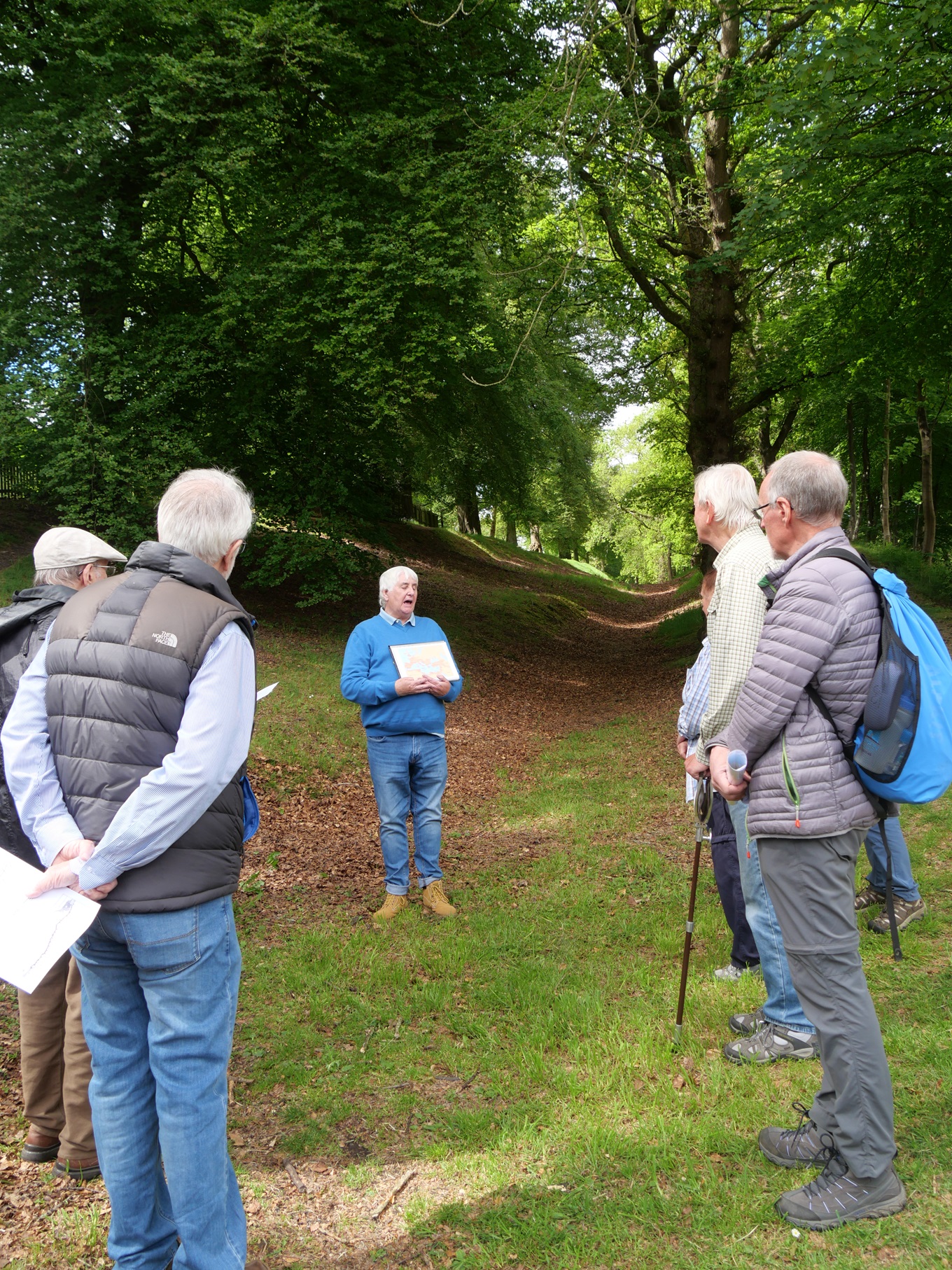
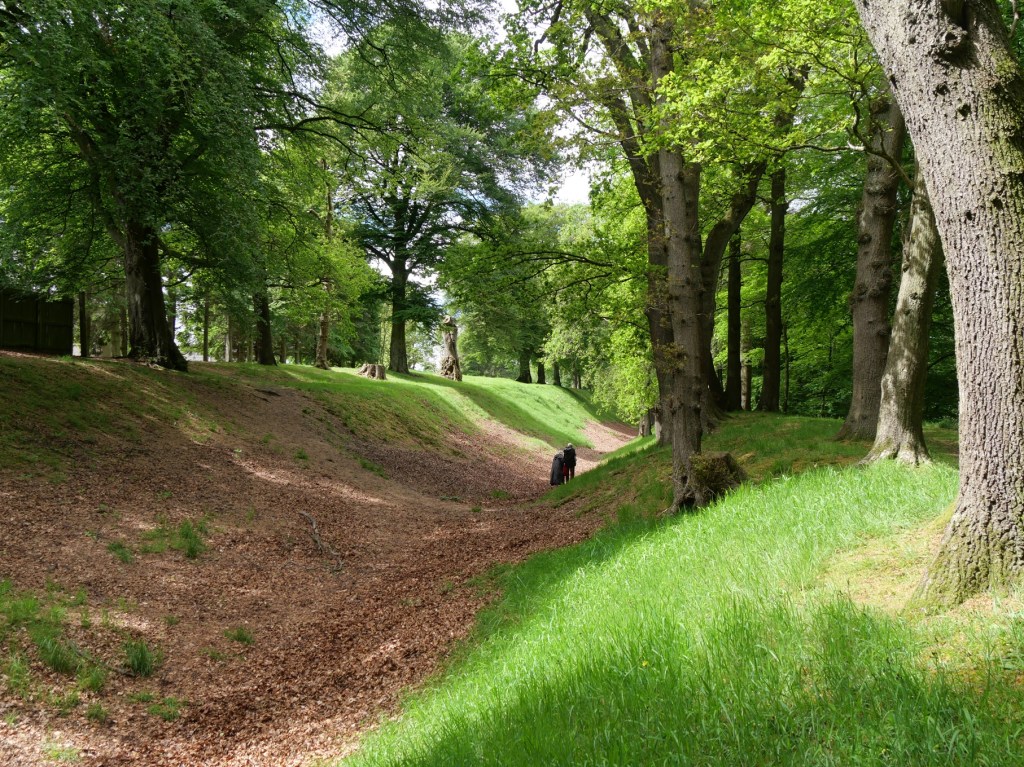
The group then moved on to an area nearby known as Watling Lodge, to explore a section of the north mound of the Antonine Wall, now covered in trees, and its deep ditch.

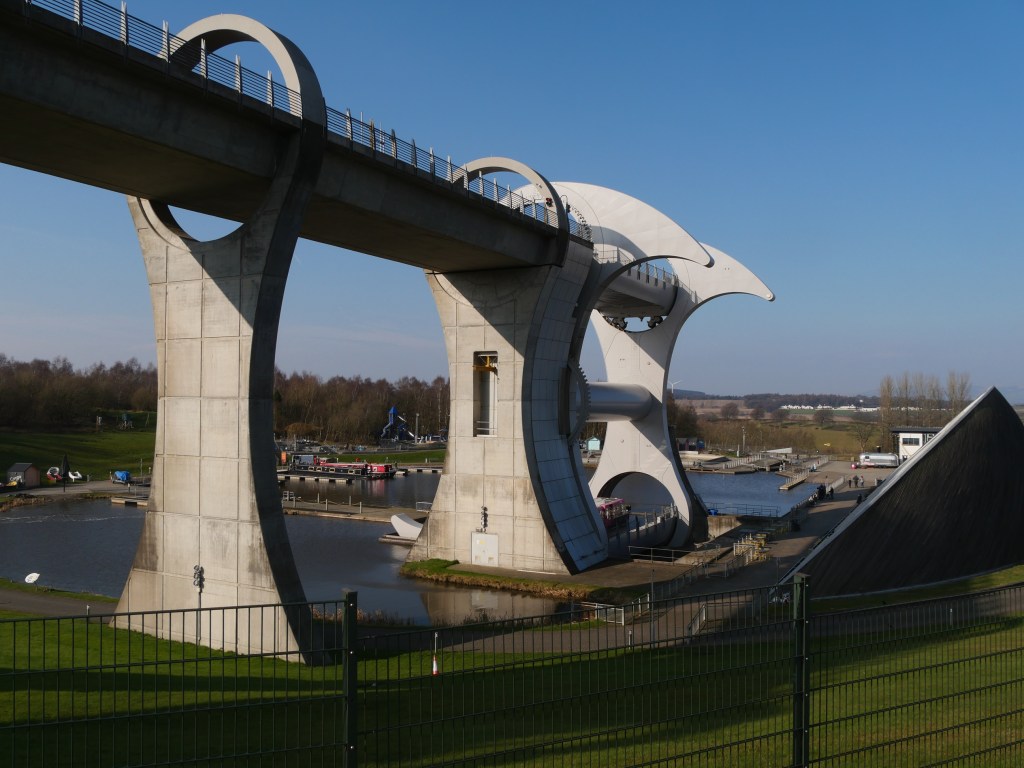
A break for lunch at the café at the Falkirk Wheel provided the opportunity to watch the canal boats being raised and lowered.

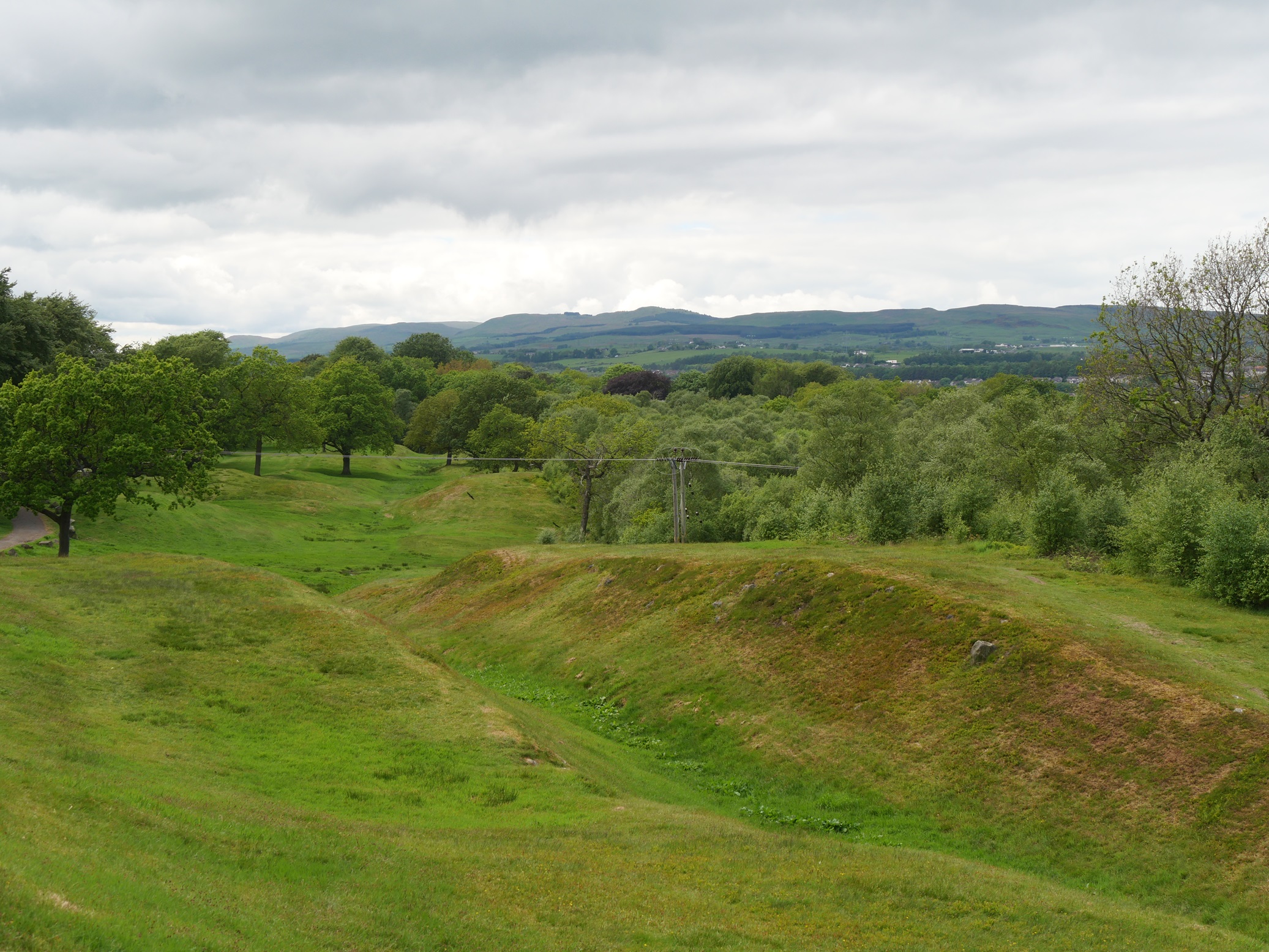
The group moved on to visit the remains of the large fort at Rough Castle beside a substantial section of rampart wall and ditch. Jim pointed out that the remains of a Roman road, now grassed over, can still be identified by its distinct camber and shallow depression on each side.
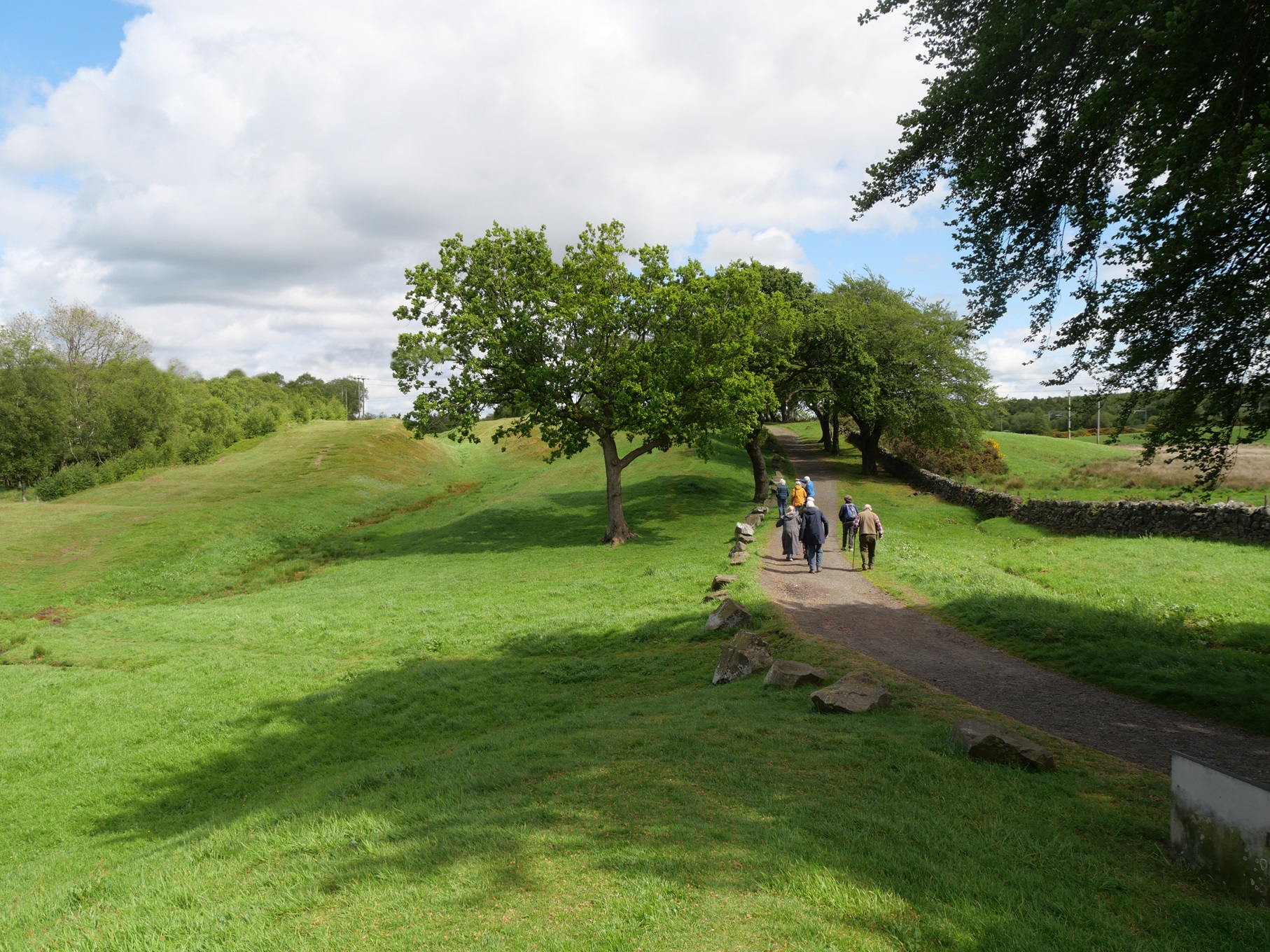


Extra protection to the wall was provided by what are known as lilia – deep holes dug in staggered rows, each containing sharpened wooden stakes as a simple but effective deterrent to attackers. A section of these pits can still be seen at Rough Castle.

Green-veined white and Orange-tip butterflies on the right were seen in this area.


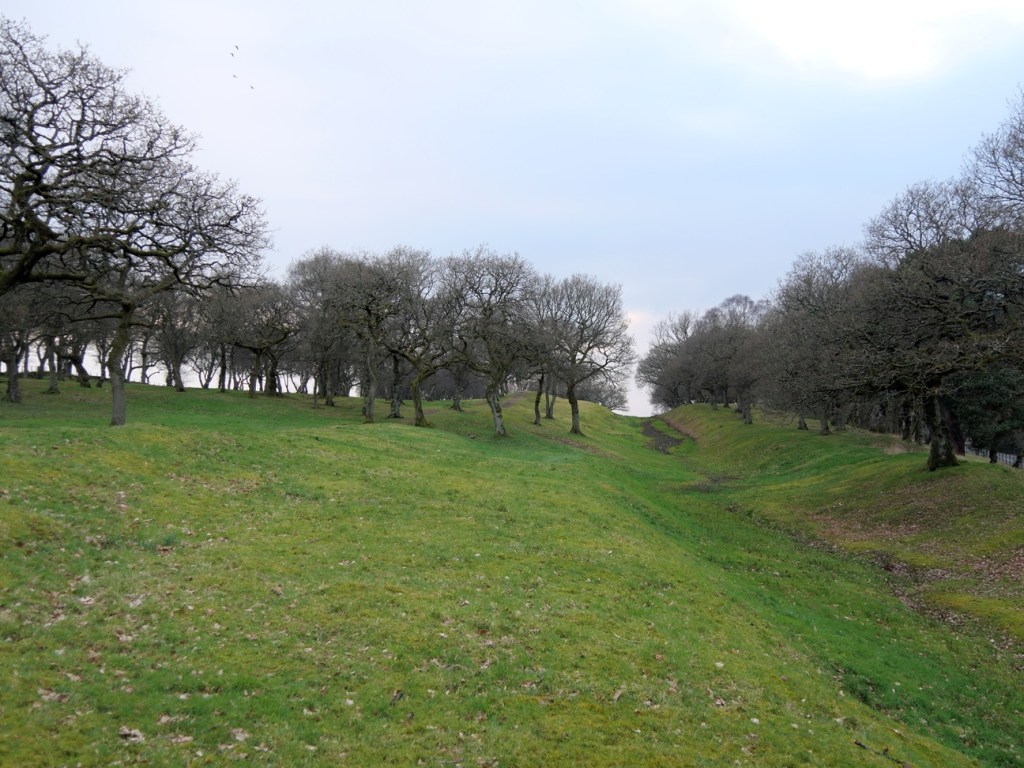
We had originally intended also to visit the Seabegs Wood section of the wall but due to very limited parking there, we had to omit it from today’s visits. However, from a previous visit, this is what we would have seen. Jim had mentioned that he had been involved in the discovery and excavation of a Roman Fort just to the west of the wood, but this is now buried under a farmer’s field.

The final stop was to see what is left of the fort at Castlecary, which had a railway line built right through it in 1841.

Jim said that there are records that, until then, parts of the stone buildings of the fort were still standing to a height that provided shelter for shepherds in bad weather, but the landowner allowed them to be completely demolished, and now there is little to see. He pointed out that many of the distinctive squared stones from the fort are now built into the 19th century wall which borders the area.
Without expert guidance it would have been hard to fit visits to such a varied and interesting range of places into a day’s tour, and the meticulous planning by Jim and Ian Stewart ensured that it was a great success. Jim Walker’s short and clear talks, as well as the extensive illustrated handouts which he provided at each site, added greatly to the enjoyment and understanding of this remarkable wall and its forts.
Thanks for this review compiled by Fran Gillespie, and photographs provided by Lesley Whitwood and Ian Stewart



 Breadalbane Heritage Society
You must be logged in to post a comment.