Ancient Magnificence: Arbroath Abbey and Beyond

Breadalbane Heritage Society talk to be presented on Zoom on Friday, 18th February 2022 by Dr. Nicki Scott, Senior Cultural Resources Advisor at Historic Environment Scotland

The survival of so many Pictish carvings highlights the long tradition of Christian worship across Angus. But the tradition of monumental display continued in the medieval period; the most famous example of this is Arbroath Abbey.  

Arbroath Abbey, courtesy of Historic Environment Scotland

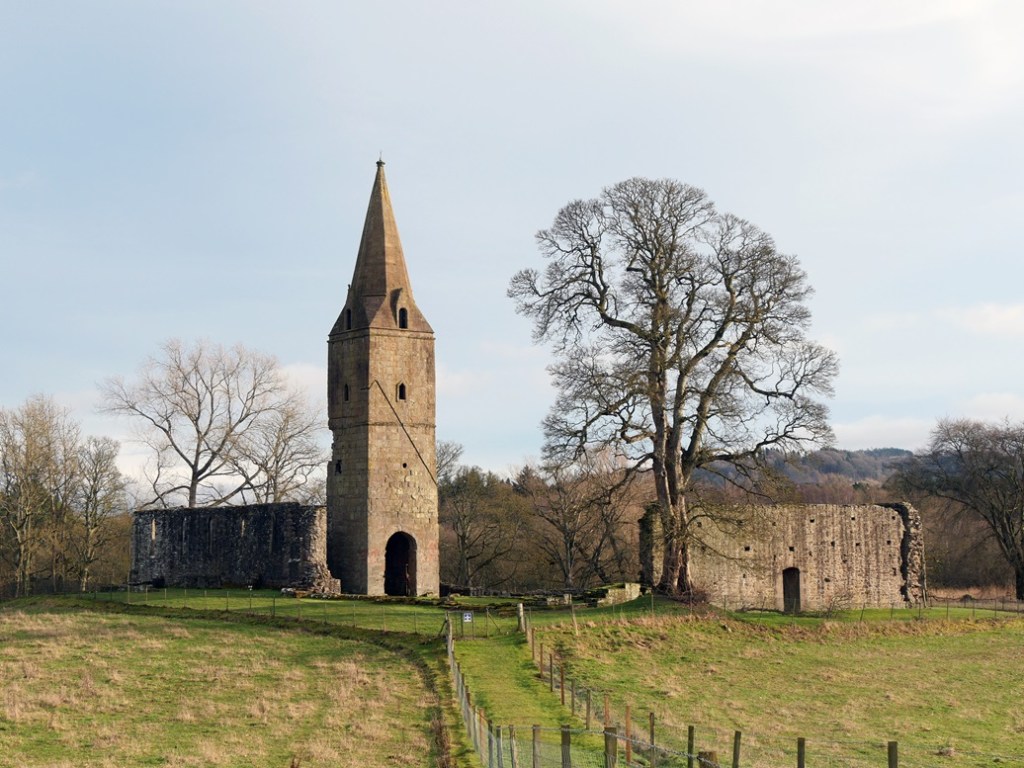
But while this royal foundation rightly draws much attention, sites such as Restenneth Priory and Maison Dieu show it wasn’t just the elites whose lives were connected to the Church.  

Restenneth Priory

Maison Dieu Chapel

In this talk, Nicki will provide some insight into the lives of these foundations and the people associated with them. This talk follows on from last month’s talk by John Borland on ‘The Early Medieval Sculpture of Highland Perthshire’ but concentrates on the area of Angus.

Please note that, in order to obtain the Zoom joining instructions for this talk, you must contact Ian by email at bhsaberfeldy@gmail.com.

The Early Medieval Sculpture of Highland Perthshire

Although Perthshire was part of Pictland, the corpus of Early Medieval sculpture in north-west or “Highland” Perthshire comprises very few Pictish stones.  The prominence of simple crosses – linear, sunken and outline – which have their origins in the Scots’ kingdom of Dál Riata, suggests not only the spread of Christianity from the west but perhaps even gradual Scottish settlement.

In this talk, John Borland will give an overview of the early medieval sculpture of Highland Perthshire, follow its distribution from west to east along the glens and straths, highlighting what is rare and unusual.  He will examine the distribution of the sculpture to see what that tells us about its cultural origins and thus assess just how “Pictish” this part of Perthshire was.

John Borland worked as an archaeological surveyor for the Royal Commission on the Ancient and Historical Monuments of Scotland and Historic Scotland (RCAHMS) and then Historic Environment Scotland (HES) for 36 years, retiring as Measured Survey Manager in May 2020.  In that time, John had the opportunity to survey almost every type of archaeological and architectural monument, from Neolithic chambered cairns to WWII coastal batteries and everything in between, including castles, churches, croft houses and country houses.  However, the main focus of his work latterly was recording Scotland’s Pictish and other Early Medieval sculpture.  John has been a member of the Pictish Arts Society for more than 20 years and is the current PAS President.

To register for the talk and to receive the Zoom joining details, you must send an email to Ian at bhsaberfeldy@gmail.com.

Schiehallion, ‘Weighing’ the World and Contour Lines 

Our next meeting takes place in Breadalbane Community Campus at 7.30pm on Friday 19th November.  The speaker will be Dr Liz Auty, East Schiehallion Property Manager for the John Muir Trust,  on the subject:  “Schiehallion:  The attraction of mountains, ‘weighing the world’ and contour lines”.  Doors open at 7pm and the talk will start at 7.30pm.  

Dr Liz Auty will discuss Maskelyne’s 1774 expedition to Schiehallion, the people, the experiment and the mountain and her work as property manager for the John Muir Trust.

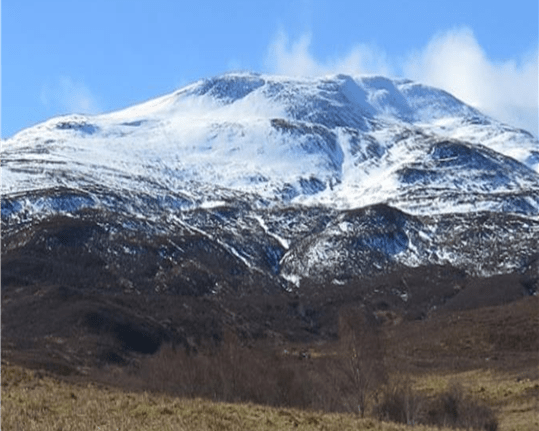
Schiehallion from the Braes of Foss

The Schiehallion experiment was set up to determine the mass and mean density of the Earth. The experiment involved measuring the tiny deflection of a pendulum due to the gravitational attraction of a nearby mountain. Schiehallion was considered the ideal location after a search for candidate mountains, thanks to its isolation and almost symmetrical shape.

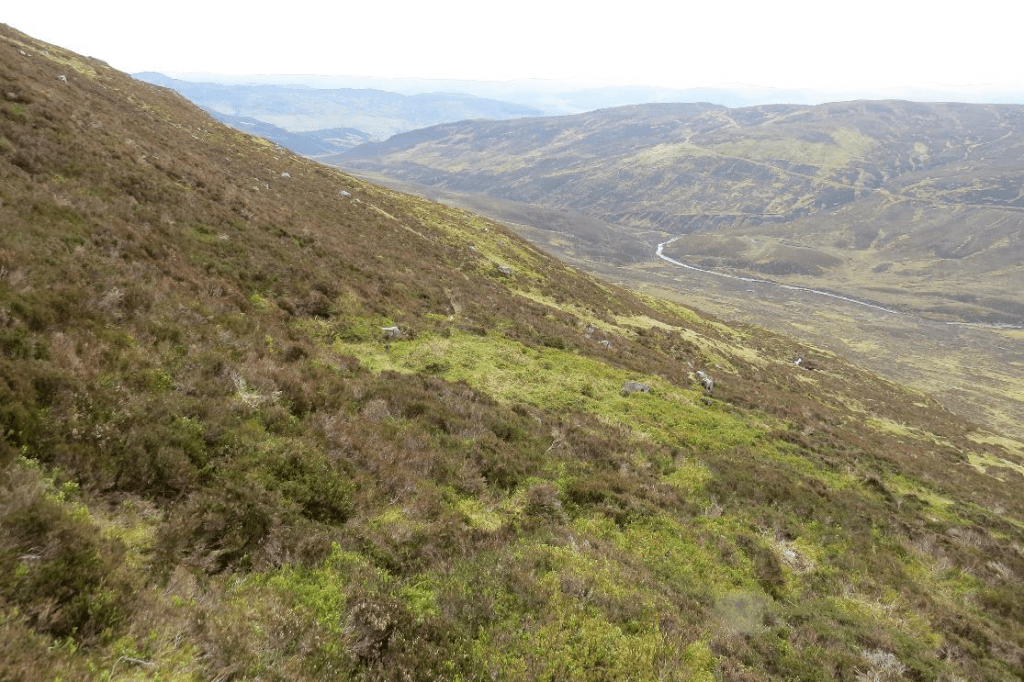
Maskelyne’s south observatory site on the side of Schiehallion

The Campus management have provided guidance regarding the Covid-related procedures that will have to be followed on the night:

  • Face coverings must be worn when moving around within the building but can be removed once seated;
  • Hand sanitiser should be used on entering and leaving the building and when moving to a different location;
  • The Hall will be as well ventilated as possible ;
  • Unfortunately we will not be able to serve any refreshments.  ;
  • We are required to keep a register of all attendees as we will be responsible for any contact tracing in the event of a positive case.  (Lesley Whitwood is the BHS Covid Officer). 

‘Pitlochry in Threes’: A talk by Colin Liddell

Due to the Covid restrictions in place at the time, we were not able to hold any of our 2020-21 winter season of talks ‘in person’ at our normal venue in the Breadalbane Community Campus. Consequently, in order to offer a programme of talks to our membership, we ventured into the unknown world for us of online Zoom presentations.

From the October talk onwards, we recorded these talks to make them available to a wider audience, but we were not sufficiently prepared to do this for Colin Liddell’s talk on ‘Pitlochry in Threes’ which opened our winter season in September 2020. However, we are delighted that Colin subsequently was keen to present his talk once again, but without an audience in this instance, and have it recorded.

Colin is a local solicitor and historian who in recent years has presented four talks to the Society on Pitlochry and General Wade’s roads. This current talk is an eclectic dip into the assortment box of Pitlochry’s local history, by looking at lots of groupings of three things to show how Pitlochry has been shaped over the years.  Topics and artefacts included the Lude Harp, Black Spout toggle and the Clach na Brataich.

The video is approximately 27 minutes long and can be viewed below:

If you wish to view this video at a larger size, click on the ‘full screen’ button at the bottom right-hand corner of the images above:

Salmon and Salmon Fishing in the River Tay: Past, Present and Future

Dr. David Summers is the Fisheries Director of the Tay District Salmon Fisheries Board and has over 30 years’ experience in the field of  salmon and freshwater fisheries research and management. 

On Friday, 17th September he opened our 2021-22 winter season of talks with a talk on talk entitled ‘Salmon and Salmon Fishing in the River Tay: Past, Present and Future’. Due to on-going Covid restrictions, we weren’t allowed to hold this talk ‘in person’ in our normal venue of the Breadalbane Community Campus in Aberfeldy, and presented it online on Zoom instead. 36 people registered for, and attended, this talk, of which 12 were non-members of our Society.

David’s talk encompassed the life cycle of the salmon, the drastic reduction in salmon numbers, current scientific research studies and findings, and local socio-economic benefits. David provided an overview of the status of the River Tay’s salmon population and fisheries, with an emphasis on how things compare with the past and what the future might hold. Particular emphasis was placed on issues local to the Breadalbane area such as hydro development.

Two versions of the recording of the talk are available to view.  The first is approximately one hour long and contains just the talk.  The second includes an additional subsequent 30-minute Q&A session providing further supplementary information.  Both of these videos can be viewed below:

Full Talk with the Q&A session (90 minutes):

Only the talk  (60 minutes):

If you wish to view these videos at a larger size, click on the ‘full screen’ button at the bottom right-hand corner of the images above: