
Our winter season of six monthly talks begins in September and runs through to March on the third Friday of the month, apart from December when there is not a talk. With the exception of the January and February talks which are presented only online on Zoom, the other talks are held in the main hall of the Breadalbane Community Campus in Aberfeldy at 7.30 p.m.
However, taking into consideration the likelihood of adverse winter weather during the months of January and February making travel difficult for the speakers and audience alike, and from comments that many are unwilling to venture out on cold, wet, snowy winter evenings, we have decided to continue to present the January and February talks online on Zoom only. This also allows us to continue to have contact with the wider audience of all those who have joined our Zoom talks since the 2020-21 winter season when, due to Covid restrictions, we were not able to hold live in-person talks in the Breadalbane Community Centre.
From our constitution, one of the Charitable Purposes of the Society is to advance education, heritage and culture by promoting and encouraging an interest in the study of the archaeology, history, antiquities, folklore and natural history, particularly concerning the Breadalbane and Upper Tay area of Perthshire. With this in mind and when possible, we try each year to build our programme of talks around these five topics associated with our local area. Our 2025-26 season includes talks on natural history, history, antiquities and archaeology; it is always more difficult to source talks on local folklore.
2025-26 Programme of Winter Talks

The first winter talk on Friday, 19th September 2025, was presented in the Breadalbane Community Campus, Aberfeldy:
‘Strategic Control of Invasive Non-Native Species in a River System’, presented by Mark Purrman-Charles.
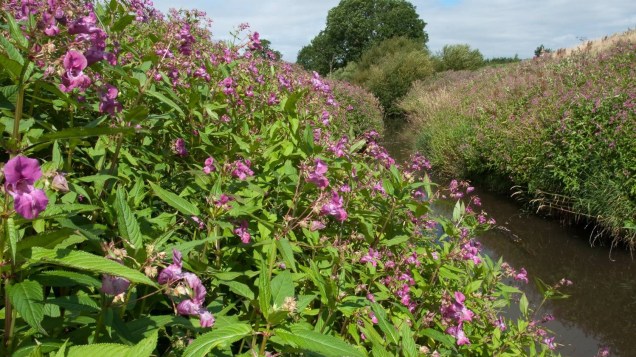
Himalayan Balsam
Mark, from The Scottish Invasive Species Initiative (SISI), talked about the work SISI has done within the Esk & Tay catchment area and how invasive plants, particularly Giant Hogweed and Japanese Knotweed have been controlled so successfully within the Upper Tay area .
The Scottish Invasive Species Initiative (SISI) is a project set up to tackle invasive non-native species alongside rivers and watercourses in northern Scotland.
Invasive Non-Native Species (INNS) are a significant threat to our environments, our native wildlife, our economy, and in some cases to our health. Working with local volunteers and by trialling innovative management techniques, SISI develops long-term solutions to invasive species management.
The project is led by NatureScot and funded by the National Lottery Heritage Fund, NatureScot and the Scottish Government’s Nature Restoration Fund, managed by NatureScot, with in-kind support from project partners and volunteers.
On Friday, 17th October 2025, Alan Fisher presented an illustrated talk on ‘Aberfeldy’s Industrial Revolution’
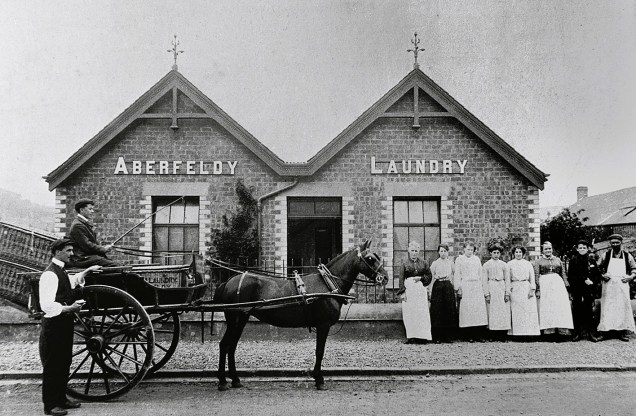
The transformation of Aberfeldy from a few hovels to the smart town we know today, took place during the Industrial Revolution and was profoundly influenced by it. Alan Fisher, whose family has a history in the town spanning over 200 years, discussed Aberfeldy’s development with particular focus on the history of its wool, whisky and laundry industries.
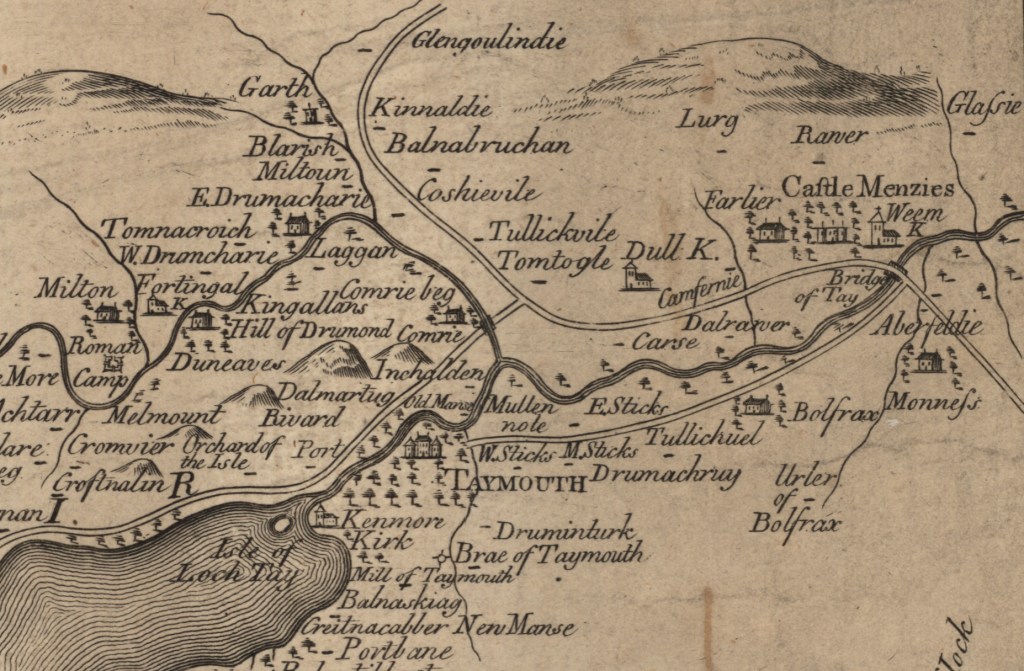
On Friday, 21st November 2025, Chris Fleet, Map Curator at the National Library for Scotland (NLS), will present a talk in the Breadalbane Community Campus, Aberfeldy, on ‘The Mapping of Perthshire and Breadalbane through the Ages’.
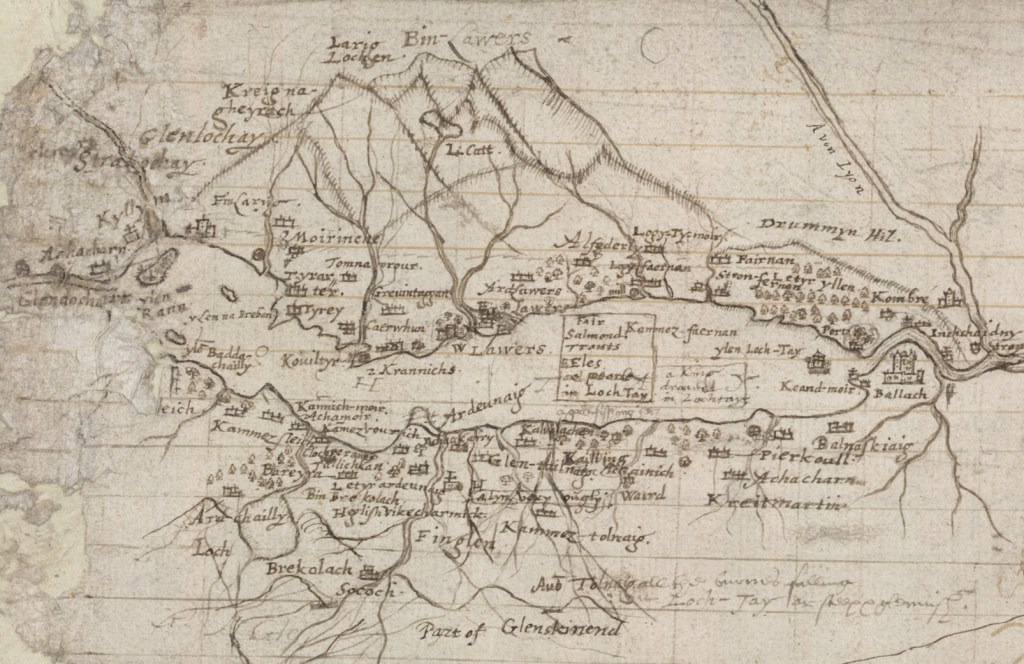
Pont Maps of Scotland 1580-1614
Cameron – Part of Map of Breadalbane 1770
This talk will examine selected maps of Perthshire and Breadalbane over the last four centuries, looking at who made these maps, why, and who they made them for. Over the centuries, different purposes including state integration, military conquest, agricultural improvement, and improving communications resulted in very different maps. A particular focus will also be on how particular map-makers gathered their information, and how this resulted in very different maps. It will finish up by looking at new online content of interest on the NLS maps website, particularly new maps, gazetteers, viewers and tools.

Bartholomew Map 1903
Chris Fleet has worked at the National Library of Scotland since 1994. His main focus at NLS has been on curating digital mapping, including the electronic legal deposit of modern map datasets, as well as managing long-term projects to make available historical maps online. He has researched, written and spoken widely on these subjects, and is a co-author of Scotland: Mapping the Nation (2011), Edinburgh: Mapping the City (2014), Scotland: Mapping the Islands (2016), and Scotland: Defending the Nation (2018).
On Friday, 16th January 2026, Debbie Nicholson, Visitor Services Supervisor at Falkland Palace and Garden in Fife will present on Zoom only a talk entitled ‘Secrets of the Apothecary: Health and Healing at Falkland Palace’.
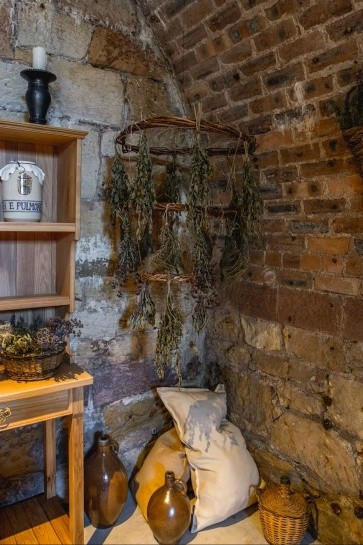
In 2018, NTS staff in Falkland Palace installed a reproduction Apothecary in one of their cellar rooms. The purpose was to allow them to talk about the way medicine was understood and practised in the late 16th century, when King James VI was frequently in residence with an entourage including his Royally appointed medical men.
This talk will take a closer look at the Royal Apothecaries – who they were, how they understood health and medicine and what their practice looked like.
Debbie has been working at Falkland Palace for three years. Her specific interest in the Palace apothecary stems from her previous background – she has a PhD in History of Medicine and taught medical history as well as sociology for 20 years before joining the team at Falkland Palace.
Prior to the talk commencing, the Breadalbane Heritage Society’s Annual Members Meeting will be held, commencing at 7.15 p.m..
On Friday, 20th February 2026, Professor Gordon Noble will present on Zoom only a talk entitled ‘The Southern and Fortingall Pictish Kingdoms’.
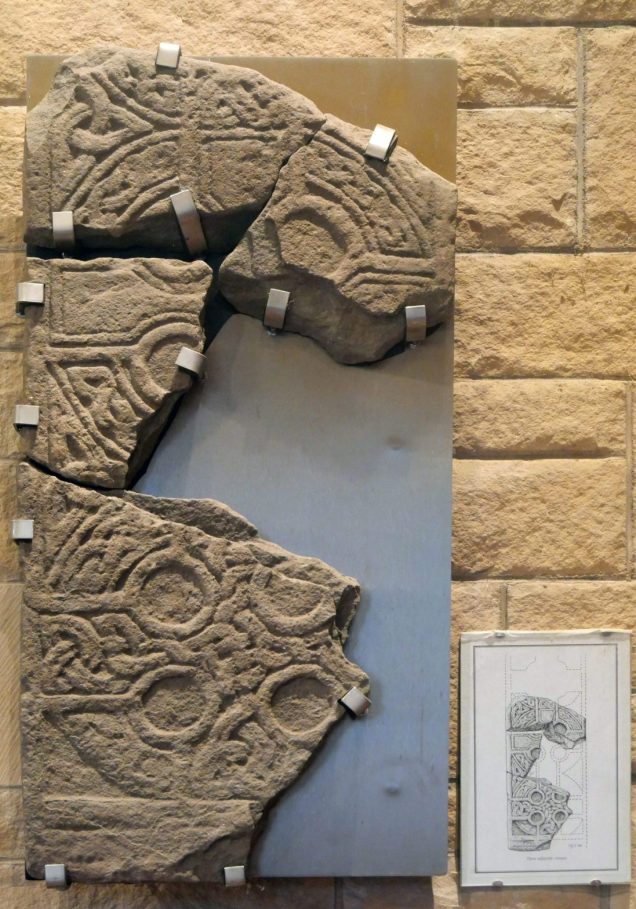
Gordon will talk about the “Southern Scottish Picts” who are referred to the Pictish people who inhabited southern regions of their territory, particularly in what is now Perthshire. Unlike the more commonly referenced northern Picts, the southern groups were distinct, with evidence of genetic and cultural differences. They were a powerful kingdom, with a royal power centre identified at Forteviot and significant religious and assembly sites at places like Abernethy and Scone. This southern kingdom was the most enduring and powerful of the Pictish kingdoms and was central to the creation of the Kingdom of Alba, which eventually absorbed the Picts by the 10th century.
Fortingall Pictish carved stone
Gordon was appointed as lecturer to the department at Aberdeen in July 2008. In 2012 he became Senior Lecturer, Head of Department in 2015, Reader in 2017 and Professor in 2019. He is also an Honorary Curatorial Fellow to the University Museums.
On Friday, 20th March 2026, Tommy Pringle will present at the Breadalbane Community Campus a talk entitled ‘The History of the Menzies Family: from Normandy to Northern England ending in Perthshire at Castle Menzies’.

Castle Menzies
The talk will be on the history of the Menzies family from Normandy, to Northern England and then to Scotland settling of the lands in Perthshire up to 1920. This will also include the history of Castle Menzies and the restoration work that has taken place since 1956.
Tommy has been a member of the Clan since the early 1970s, following on from his mother and grandfather, both Menzies and both born round the Castle. As restoration enabled the Castle to be opened again, local youths were asked to help. With his interest in history, Tommy jumped at the chance and has been involved both with the Castle and Clan Society ever since, being a member of the Clan Council and also occasionally a tour guide of the Castle.
Archive
For full details of previous years’ programmes of winter and summer excursions, please refer to the Events’ archive pages below:
 Breadalbane Heritage Society
You must be logged in to post a comment.