August BHS Visit to Angus

17 BHS members participated in the final BHS summer excursion for a 4-day trip to the Angus area to visit a number of archaeological and historical sites, predominantly owned by Historic Environment Scotland, from Monday the 22nd to Thursday the 25th of August.

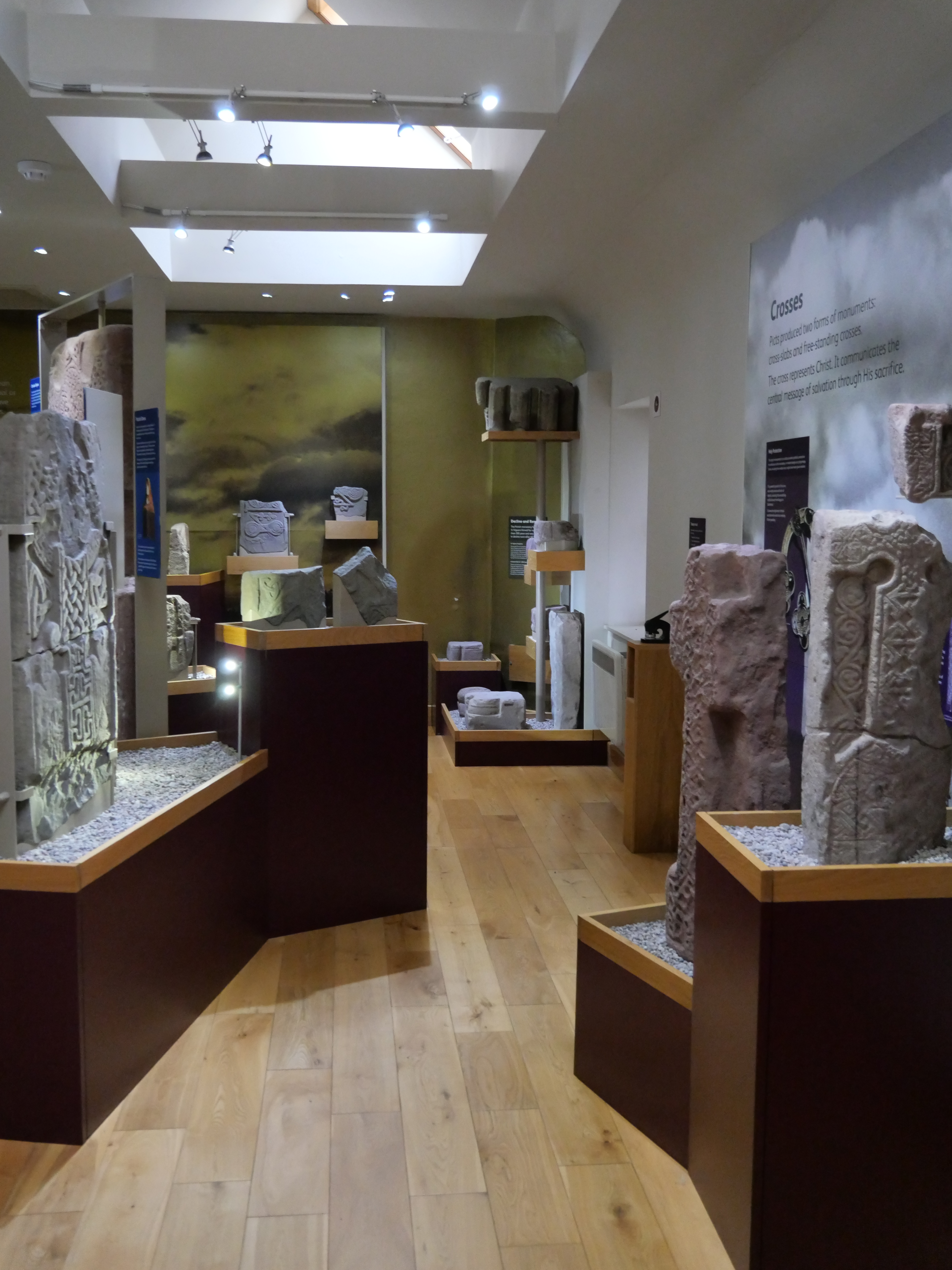
On the Monday, we visited the Meigle Sculptured Stone Museum, the Eassie Sculptured Stone and the four sculptured stones at Aberlemno before travelling to the George Hotel in Montrose, our base for the following days. We were very lucky that John Borland, who presented a talk on Medieval Sculptured Stones for us in January, was able and keen to join us for the day and to guide us through the meaning of many of the Pictish symbols.

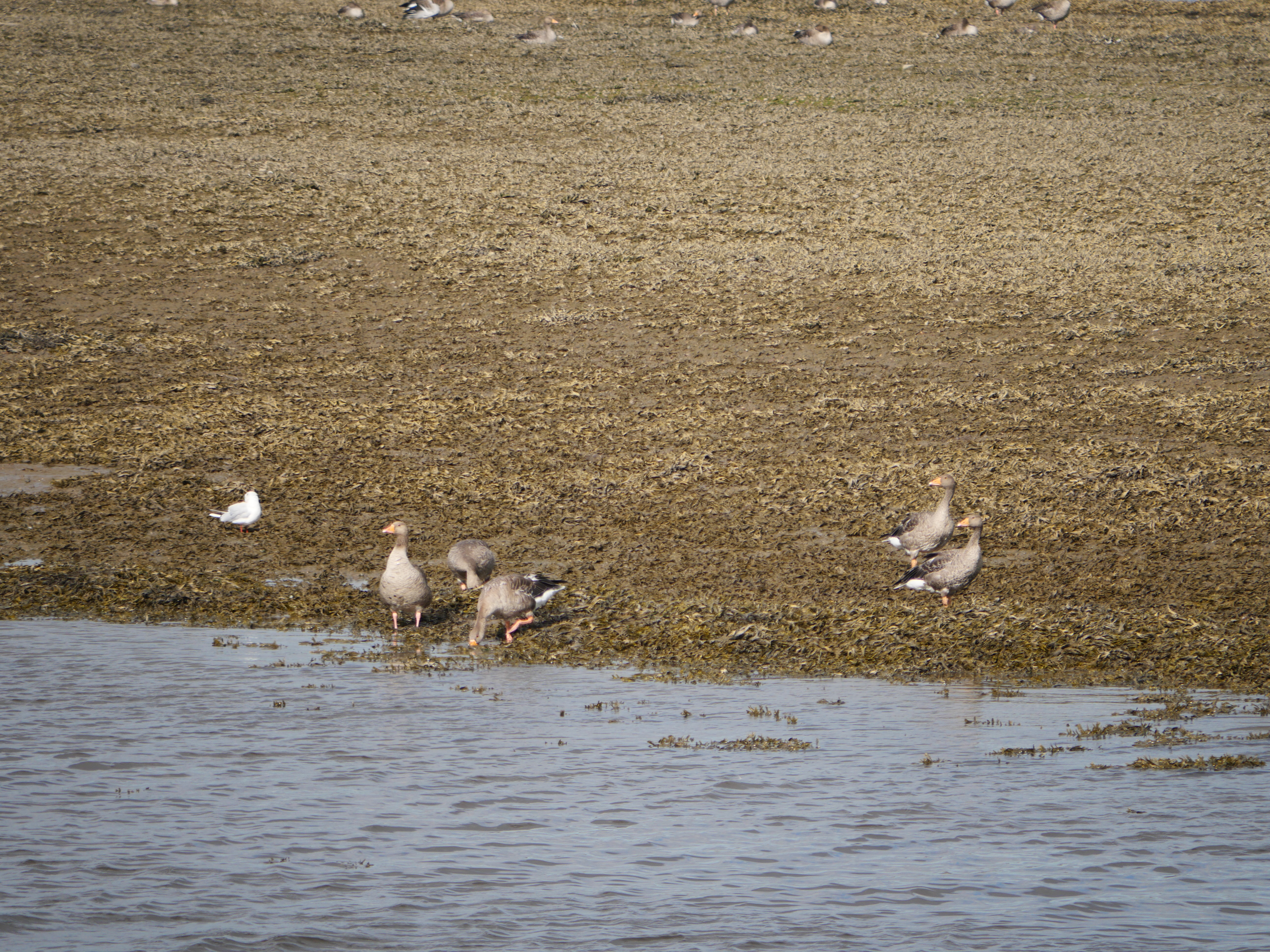
Tuesday took us to Arbroath Abbey and the Arbroath Signal Tower Museum in the morning, and to the Scottish Wildlife Trust’s Montrose Basin Visitor Centre in the afternoon.

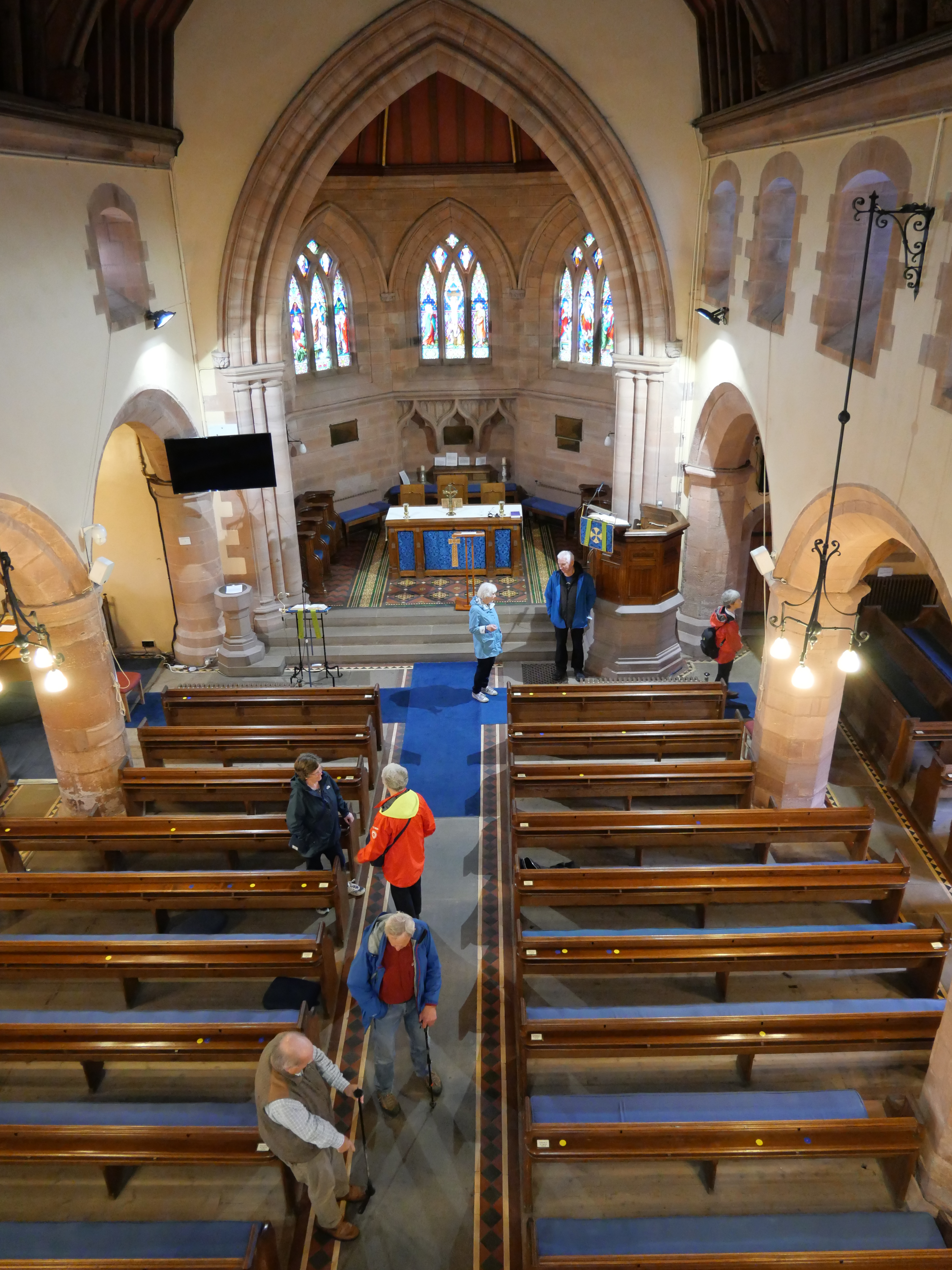
Further Pictish sculptured stones were inspected at the St. Vigeans Sculptured Stones Museum on Wednesday morning with a visit to the neighbouring St. Vigeans Parish Church before driving to Forfar to see more Pictish stones in the Meffan Institute Museum and Art Gallery.
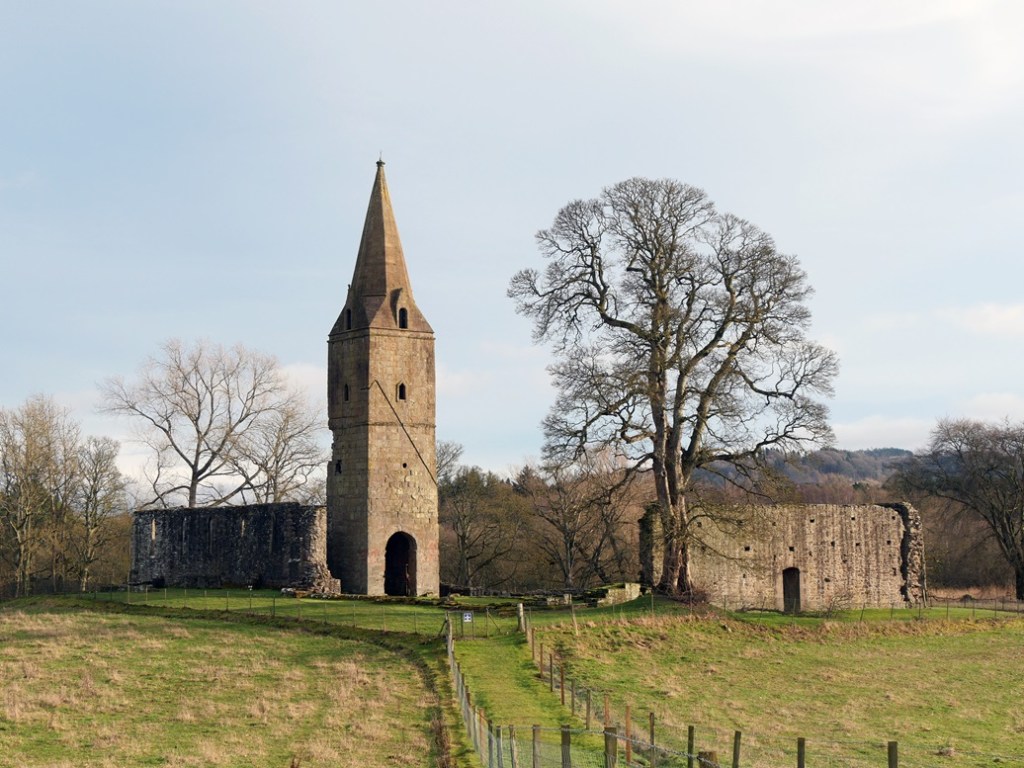
On the final morning, we visited the National Trust for Scotland’s House of Dun and gardens just to the west of Montrose which included an informative and interesting guided tour of the interior of the house. In the afternoon, many of the fifteen members of the group managed to visit other sites on their way back to the Aberfeldy area which included the White and Brown Caterthun iron age hill forts to the north of Brechin and Restenneth Priory just to the east of Forfar.

If you would like further information on all the sites we visited, you will find a more comprehensive narrative with many more photographs on this page in our website:

https://breadalbane-heritage.org.uk/bhs-visit-to-angus-in-august-2022/

‘The Early Medieval Sculpture of Highland Perthshire’ talk video

On Friday, 21st January 2022, John Borland presented his talk which provided an overview of the early medieval sculpture of Highland Perthshire, following its distribution from west to east along the glens and straths, highlighting what is rare and unusual.  He examined the distribution of the sculpture to see what that tells us about its cultural origins and thus assess just how “Pictish” this part of Perthshire was.

John worked as an archaeological surveyor for the Royal Commission on the Ancient and Historical Monuments of Scotland and Historic Scotland (RCAHMS) and then Historic Environment Scotland (HES) for 36 years, latterly recording Scotland’s Pictish and other Early Medieval sculpture.

Fortingall Sculptured Stones’ visit

Wednesday, 6th July, 2022 tour of the Pictish stones in Fortingall Kirk and kirkyard led by John Borland.

Twenty members of the BHS gathered in Fortingall Kirk on 6 July to hear John Borland talk about the remarkably rich selection of fragments of carved stones displayed within the church and also outside.  John is well known to many of our members, having previously given talks on the subject both at BHS meetings and at TAFAC conferences.  He worked as an archaeological surveyor for the Royal Commission on the Ancient and Historical Monuments of Scotland for many years, the main focus of his work being the recording of Scotland’s Pictish and Early Medieval sculpture. 

Before looking at and discussing the examples of the carved stones within the kirk and those in the courtyard, John talked about the history and development of sculptured stones in this area.

Some of the pieces of carved stones, dating to around 800 AD, were discovered during the demolition of the previous church in 1901, having been built into the walls of the church.  

Their remarkably crisp carving, having been protected from the elements for many centuries, contrasts with the worn condition of some of the ancient grave slabs displayed against the walls of the church outside.  

John pointed out that the stone on display on the north wall behind the pulpit, which is made up of three linked ringed crosses, is of a very rare type.  

Other examples of three simply-incised crosses can be seen on one of the stones outside.  Another stone is carved with what appears to be the folds of robes worn by angels or saints.  

John observed that none of the finely carved stones were made from locally-obtained material but of a fine grey sandstone, which may have come from Strathmore and is similar to that of the Pictish cross slabs in the museum at Meigle.

Some of the recent additions to the magnificent assemblage of sculptured stones at Fortingall were discovered lying on the top of the Kirk’s boundary walls which had become exposed after the local council had cut back the creeping ivy from the walls.

After the talk, when a tour of the kirkyard was made, John made the interesting observation that the large natural boulder with a deep circular water-filled hole cut into it, which lies next to the porch, may not have been used as a christening font as we know it.  It could, he said, have been on the ground beside the church entrance and been used for foot washing, or for the baptism of recently-converted adults where the person stood in the water for the ceremony.

Everyone who attended this talk and tour agreed that it had been a fascinating and informative morning, and we are very grateful to John Borland for yet again giving up his time to help us learn more about the rich cultural heritage of this area.

If you would like to view the talk, ‘The Early medieval Sculpture of Highland Perthshire’, which John presented to the Breadalbane Heritage Society on Friday, 21st January, 2022, you can view this here:

If you wish to view this video at a larger size, click on the ‘full screen’ button at the bottom right-hand corner of the image above:

The Early Medieval Sculpture of Highland Perthshire

A talk presented on Zoom by John Borland to the Breadalbane Heritage Society on Friday, 21st January, 2022.

In this talk, John gave an overview of the early medieval sculpture of Highland Perthshire, following its distribution from west to east along the glens and straths, highlighting what is rare and unusual.  He examined the distribution of the sculpture to see what that tells us about its cultural origins and thus assess just how “Pictish” this part of Perthshire was.

John Borland worked as an archaeological surveyor for the Royal Commission on the Ancient and Historical Monuments of Scotland and Historic Scotland (RCAHMS) and then Historic Environment Scotland (HES) for 36 years, retiring as Measured Survey Manager in May 2020.  In that time, John had the opportunity to survey almost every type of archaeological and architectural monument, from Neolithic chambered cairns to WWII coastal batteries and everything in between, including castles, churches, croft houses and country houses.  However, the main focus of his work latterly was recording Scotland’s Pictish and other Early Medieval sculpture.  

John has been a member of the Pictish Arts Society for more than 20 years and is the current PAS President.

You can view John’s talk here:

If you wish to view this video at a larger size, click on the ‘full screen’ button at the bottom right-hand corner of the image above:

This talk was presented on Zoom, but unfortunately due to the vagaries of local internet connections, John’s speech was disrupted in a number of occasions. However, the general content of his talk is still discernible during these instances.

Ancient Magnificence: Arbroath Abbey and Beyond

Breadalbane Heritage Society talk to be presented on Zoom on Friday, 18th February 2022 by Dr. Nicki Scott, Senior Cultural Resources Advisor at Historic Environment Scotland

The survival of so many Pictish carvings highlights the long tradition of Christian worship across Angus. But the tradition of monumental display continued in the medieval period; the most famous example of this is Arbroath Abbey.  

Arbroath Abbey, courtesy of Historic Environment Scotland

But while this royal foundation rightly draws much attention, sites such as Restenneth Priory and Maison Dieu show it wasn’t just the elites whose lives were connected to the Church.  

Restenneth Priory

Maison Dieu Chapel

In this talk, Nicki will provide some insight into the lives of these foundations and the people associated with them. This talk follows on from last month’s talk by John Borland on ‘The Early Medieval Sculpture of Highland Perthshire’ but concentrates on the area of Angus.

Please note that, in order to obtain the Zoom joining instructions for this talk, you must contact Ian by email at bhsaberfeldy@gmail.com.

The Early Medieval Sculpture of Highland Perthshire

Although Perthshire was part of Pictland, the corpus of Early Medieval sculpture in north-west or “Highland” Perthshire comprises very few Pictish stones.  The prominence of simple crosses – linear, sunken and outline – which have their origins in the Scots’ kingdom of Dál Riata, suggests not only the spread of Christianity from the west but perhaps even gradual Scottish settlement.

In this talk, John Borland will give an overview of the early medieval sculpture of Highland Perthshire, follow its distribution from west to east along the glens and straths, highlighting what is rare and unusual.  He will examine the distribution of the sculpture to see what that tells us about its cultural origins and thus assess just how “Pictish” this part of Perthshire was.

John Borland worked as an archaeological surveyor for the Royal Commission on the Ancient and Historical Monuments of Scotland and Historic Scotland (RCAHMS) and then Historic Environment Scotland (HES) for 36 years, retiring as Measured Survey Manager in May 2020.  In that time, John had the opportunity to survey almost every type of archaeological and architectural monument, from Neolithic chambered cairns to WWII coastal batteries and everything in between, including castles, churches, croft houses and country houses.  However, the main focus of his work latterly was recording Scotland’s Pictish and other Early Medieval sculpture.  John has been a member of the Pictish Arts Society for more than 20 years and is the current PAS President.

To register for the talk and to receive the Zoom joining details, you must send an email to Ian at bhsaberfeldy@gmail.com.

Our new 2021-22 Season of Winter Talks and Summer Excursions

After 18 months of Covid restrictions with all our 2020-21 winter programme of talks having been presented online by Zoom, we were hopeful that we would be able to present our new season of winter talks commencing in September 2021 ‘in person’ in our regular venue, the Breadalbane Community Campus in Aberfeldy. However, we were informed that public use of the main hall in the Breadalbane Campus complex would only be possible from the beginning of October. Consequently, our first winter talk on the 17th September was presented online using Zoom, but we were able to return to the Breadalbane Campus for our October talk. We are hopeful that the November and March talks will also still be able to take place in the Breadalbane Campus.

Taking into consideration the likelihood of adverse winter weather during the months of January and February making travel difficult and from comments and suggestions from our members that they are unwilling to venture out on cold, wet winter evenings, we have decided for this season to present the January and February talks online by Zoom. As we hold the talks on the third Friday of the winter months, there is not a talk in December as it would come very close to Christmas. Joining details for each Zoom meeting will be provided prior to each talk.

2021-22 Programme of Winter Talks

Friday 17th September 2021: Dr. David Summers – ‘The Atlantic Salmon’ (by Zoom)

Friday 15th October 2021: Rob Hands – ‘Battles of the Three Muirs’

Friday 19th November 2021: Dr. Liz Auty – ‘The Attraction of Mountains, Schiehallion, ‘Weighing’ the World and Contour Lines’

Friday 21st January 2022: John Borland – ‘The Early Medieval Sculpture of Highland Perthshire’ (by Zoom)

Friday 18th February 2022: Dr. Nicki Scott:  ‘Ancient Magnificence: Arbroath Abbey and beyond’ (by Zoom)

Friday 18th March 2022: Annette Carruthers:  ‘James MacLaren and the Arts and Crafts Movement’

2022 Programme of Summer Excursions

In association with the programme of winter talks, we also run a short season of half and full-day excursions from late May to mid-July, ideally to locations referred to in some of the winter talks.

Amongst the locations we are currently considering are:

  • a full-day trip to visit Watling Lodge, Rough Castle Fort, Seabegs Wood and Castlecary Fort on the Antonine wall, led by Jim walker who presented an excellent informative talk to the Society on the Antonine Wall in November 2019;
  • a visit led by Dr. Liz Auty to look at the traces of the social and natural history evident on the the lower levels around Schiehallion;
  • a visit to the Duplin Moor and Tippermuir battlefields to the west of Perth, led by Rob Hand following his talk on these battles in October.

In addition, we are considering a three or four-day trip to Angus in late-August to visit a number of HES and other sites, some of which will be referred to in John Borland’s January talk and included in Dr. Nicki Scott’s February talk.

These are our preliminary excursion proposals and may be subject to change. Further details will be confirmed early next year.

Refer to the Events page for further information on the forthcoming season of Winter Talks.